

Best Knitting Needles for Beginners
Bamboo, aluminum, circular, straight, or a full starter kit? Here is a friendly, honest guide to picking the first pair of needles you will actually enjoy using, plus ten solid options worth your money.
Walk into any craft store or scroll through any online listing and you will meet a wall of knitting needles: bamboo, birch, aluminum, steel, plastic, acrylic, carbon fiber, in every length and thickness imaginable. If you are brand new to knitting, that wall can feel less like inspiration and more like a quiz you did not study for. Which one is right? Does the material matter? Do you need circular needles, straight ones, or both?
The good news is that beginners do not need a perfect answer. You need a good enough answer, one that keeps your stitches from sliding off the needle in a panic, keeps your hands relaxed, and keeps you knitting long enough to fall in love with the craft. That is what this guide is built to give you. We have rounded up ten popular needle sets and kits, explained who each one suits, and laid out the practical reasoning behind every pick so you can buy once and get on with the fun part.
Along the way we will cover how materials behave in real hands, why sizes matter more than most people expect, and how to match needles to the projects beginners usually start with. If you are still working out the basics, our walkthrough on how to start knitting pairs nicely with this guide, and if you would rather buy everything in one go, you may also enjoy our roundup of the best knitting kits for beginners.
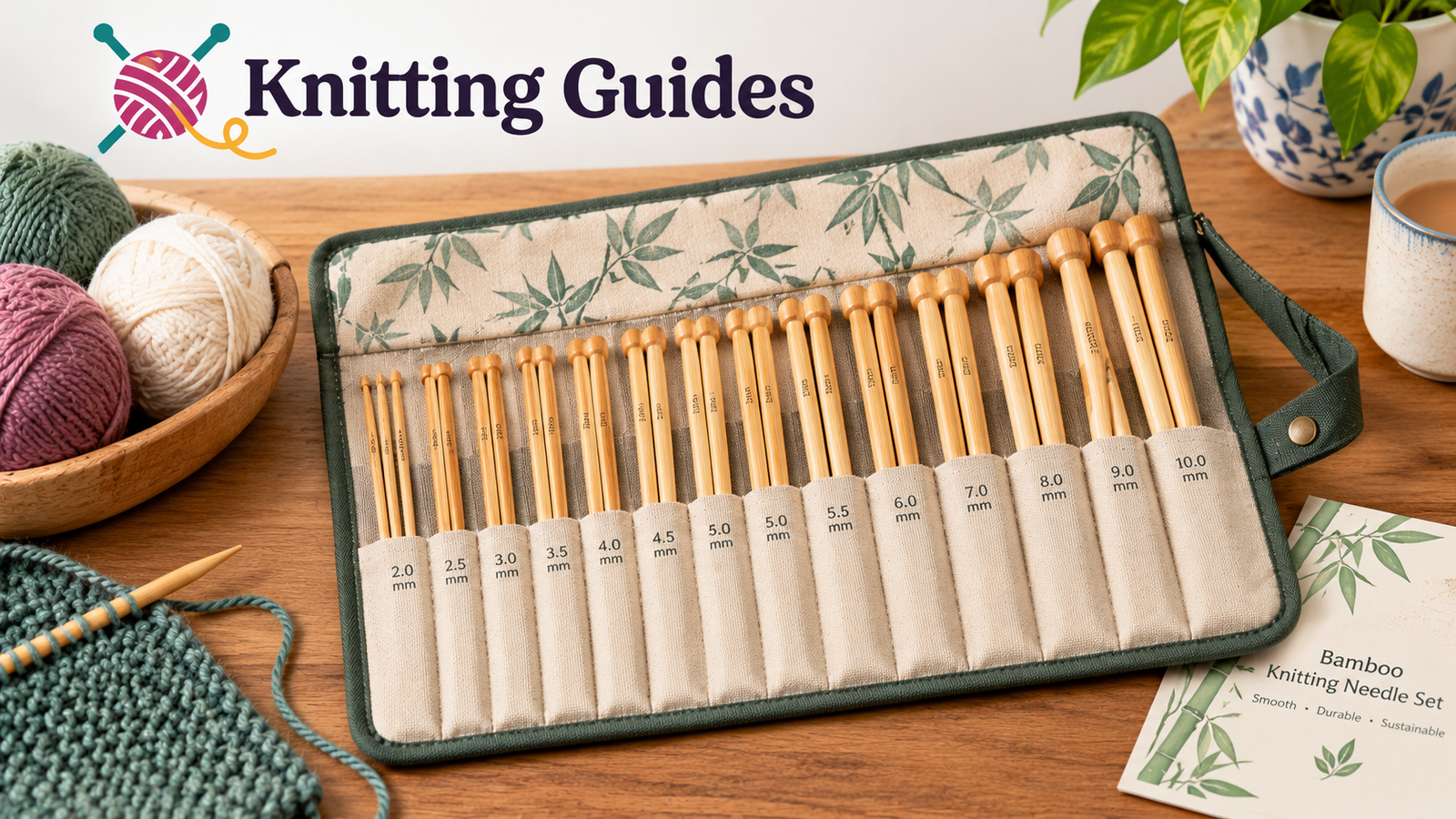
Quick Picks at a Glance
Short on time? This table sums up the ten options we cover in depth below. Think of it as the shortcut version: the details, the trade-offs, and the reasoning for each one come later in the article.
| Product | Material / Type | Best For |
|---|---|---|
| LIHAO 36 PCS Bamboo Knitting Needles Set | Bamboo, large multi-piece set | Trying many sizes on a budget |
| BetyBedy 36PCS Bamboo Knitting Needles Set | Bamboo, large multi-piece set | A second large-set option with plenty of variety |
| Exquiss Bamboo Knitting Needles Set | Bamboo, circular and straight | Learners who want both needle styles |
| ADULLPONY 7 Pairs Bamboo Knitting Needles Set | Bamboo, seven pairs | A simple, uncluttered starter collection |
| KnitPal Metal Circular Knitting Needles Set | Metal, circular | Fast, smooth knitting and bigger projects |
| Boye Aluminum Straight Knitting Needles | Aluminum, straight | Classic scarves and flat projects |
| Granny Squirrel Complete Knitting Kit | Complete kit | Zero-guesswork starting point |
| MaconGoods Grandma’s Knitting Kit | Complete kit | Gift-ready, all-in-one setup |
| Aeelike Knitting Kit for Beginners | Complete kit | Learners who want tools plus accessories |
| Addi Aluminum Knitting Needles | Aluminum | Knitters who value a premium glide |
Prices, contents, and sizes can change from listing to listing, so always read the current product page for the exact number of pieces and the sizes included before you check out. We link to each product in its own review below.
Want to browse before you decide? See popular beginner knitting needle sets and compare current options.
Browse Beginner Needles on AmazonHow to Choose Beginner Knitting Needles
Choosing needles is really a matter of answering four small questions: what are they made of, how long are they, how thick are they, and what shape do they take? Once you understand how each answer affects the feel of your knitting, the choice stops being intimidating. Let us walk through them one at a time.
Start With Grip and Glide
Every knitting needle sits somewhere on a spectrum between “grippy” and “slippery.” A grippy needle, usually bamboo or wood, holds onto your stitches with a little friction. A slippery needle, usually metal, lets stitches glide effortlessly along the shaft. Neither is better in an absolute sense, but they suit different stages of learning.
As a beginner, you will drop stitches. Everybody does. A needle that holds your loops in place gives you a little extra forgiveness while your hands figure out tension. That is why so many teachers hand first-timers bamboo. On the flip side, a very smooth needle can make your stitches fly across the shaft so quickly that you feel rushed, which is wonderful for confident knitters and a little nerve-racking for newcomers.
Think About the Needle Tip
Tips come in a range from blunt to sharp. A blunt tip is comfortable and less likely to split your yarn, but it can feel clumsy when you are working into tight stitches. A sharper tip slips into stitches more easily and helps with decreases and textured patterns, but it can catch on fuzzy yarn if you are not careful. For your first projects, a gently rounded, medium-point tip is the sweet spot. It is forgiving, easy to control, and kind to your fingertips.
Length and Cable Matter More Than You Think
Straight needles are typically sold in lengths that suit narrow projects such as scarves and dishcloths. Circular needles include a flexible cable between two shorter tips, and the cable length determines how many stitches you can comfortably hold. A shorter cable suits small projects like hats, while a longer cable gives wide blankets and sweaters room to breathe. If you plan on making a flat scarf first, either style works, which we will explain shortly.
Match Needles to Your Yarn
Your yarn label usually recommends a needle size range. Following it gives you fabric with a pleasant drape, not too stiff and not too loose. We cover the numbers in a dedicated section below, and our guide on what size knitting needles to use as a beginner goes even deeper. If you have not picked a yarn yet, our best yarn for beginner knitting roundup is a great place to start, because smooth, light-colored, medium-weight yarn makes learning dramatically easier.
Budget Wisely, Not Cheaply
You do not need to spend a fortune on your first set. In fact, we would gently advise against it. Your preferences will shift as you learn: maybe you discover you love circular needles, or that you prefer a slicker feel than you expected. A modest set lets you explore without regret. That said, extremely flimsy needles that bend or splinter can ruin the experience, so aim for products with solid reviews and a clear description of what is included.
What good beginner needles have
- Smooth, splinter-free finish
- Medium-point, rounded tips
- Clearly marked sizes
- A material that matches your comfort level
- Enough variety to grow into
Red flags to watch for
- Rough joints on circular needles
- Faded or missing size markings
- Visibly warped shafts
- Unclear listing details about contents
- Extremely sharp or extremely blunt tips
Comfort, Posture, and Hand Position
Needles that look perfect on a product page can feel wrong in your hands, and comfort is not a luxury; it decides whether you knit for ten minutes or an hour. Pay attention to how heavy the needles feel, how thick the shaft is, and how your wrists sit while you work. Many beginners grip the needles far too tightly, which tires the hands quickly. Lighter bamboo tends to encourage a looser hold, while heavier metal can sometimes tempt you to clamp down for control.
Try to keep your shoulders relaxed and your elbows close to your sides. Rest your forearms on a cushion or the arm of a chair if you can. Take short breaks every twenty minutes or so to stretch your fingers. If your hands feel uncomfortable in any lasting way, step away from the project and consider checking in with a professional rather than pushing through.
Left-Handed Knitters
Good news for lefties: needles are symmetrical, so the same set works for everyone. What changes is how you hold the yarn and which hand leads. Many left-handed knitters simply learn the standard method and find it comfortable within a few projects, while others mirror the instructions. Both approaches are valid, and no special needles are required.
Looking at the Whole Package
Beyond the needles themselves, think about what arrives in the box. Does the set include a case? Are sizes clearly marked on every piece? Are there stoppers, stitch holders, or markers? None of these extras is essential, but together they can make a set feel complete, and they add real value when you compare two options that cost roughly the same. Reading the listing slowly, rather than skimming the title, pays off.
Ready to compare sets? Explore bamboo and metal knitting needle sets side by side.
Compare Knitting Needle SetsBamboo vs. Metal vs. Wood vs. Plastic
Material is the single biggest factor in how a needle feels, so it deserves its own conversation. Here is how the main options behave in real life, particularly for people who are still learning to control tension and rhythm.
Bamboo: The Beginner Favorite
Bamboo is warm to the touch, lightweight, and gently grippy. Stitches stay put rather than skating off the end, which gives new knitters breathing room. Bamboo is also quiet; there is no clicking sound as you work, which many people find soothing. Because the material is natural and slightly flexible, it is comfortable for longer sessions and tends to be friendlier on your wrists.
The trade-offs are modest. Bamboo can feel a little slower for experienced knitters who like speed, and very thin bamboo needles can flex or, if mistreated, splinter. Keep them away from heavy pressure and avoid sitting on them, and they will serve you well for a long time.
Aluminum and Metal: Smooth and Speedy
Metal needles are slick, strong, and durable. They let stitches glide with little effort, which means your rows can move quickly once you have a rhythm. They are also very good at keeping their shape, so you do not need to worry about bending when working with dense yarn or large numbers of stitches.
The flip side is that all that glide can work against a beginner. A dropped stitch can run farther before you notice. Metal can also feel cold in your hands and make a soft clicking noise when needles touch. Many knitters adore these qualities; others find them distracting. If you are curious, a small metal set is a low-risk way to find out.
Wood: A Step Up in Warmth
Hardwoods like birch and rosewood sit nicely between bamboo and metal. They offer a gentle grip with a bit more polish, and they have a lovely, finished feel. Wooden needles can be pricier, and they are generally not the first thing we recommend to someone who has not yet decided whether knitting is for them, but they make a beautiful second pair once you are hooked.
Plastic and Acrylic: Light and Budget-Friendly
Plastic needles are inexpensive and lightweight, and they come in very large sizes that would be heavy in other materials. They can feel a little flimsy, however, and some bend under pressure. They are perfectly serviceable for chunky yarn projects, but most people eventually graduate to bamboo or metal for everyday work.
A Quick Material Comparison
| Material | Feel | Stitch Hold | Typical Beginner Verdict |
|---|---|---|---|
| Bamboo | Warm, light, quiet | Grippy | Excellent first choice |
| Aluminum / Metal | Cool, smooth, fast | Slippery | Great once you want speed |
| Wood | Warm, polished | Moderately grippy | Lovely upgrade |
| Plastic / Acrylic | Light, sometimes flexible | Varies | Fine for chunky, budget projects |
How Yarn and Needles Interact
Material choice is only half the equation. The yarn you pair with your needles changes everything. Wool and wool blends have a natural, springy texture that grips the needle, so they behave well on both bamboo and metal. Cotton has very little give, and can feel splitty and stiff, which is why bamboo is often recommended for cotton dishcloths. Acrylic ranges from silky to squeaky, and slippery varieties can dance right off a metal needle if you are not paying attention. Mohair and other fuzzy yarns look gorgeous but hide stitches, so we suggest saving them for later.
If a combination feels frustrating, change one variable at a time. Swap the needle material first, since it is the easiest fix, then consider changing the yarn. You will often find that a pairing that felt awful suddenly feels effortless with a small adjustment.
Does Color Matter?
It does, in a practical sense. Dark needles disappear against dark yarn, while light bamboo against pale yarn can blur together. A little contrast between your needles and your yarn makes stitches easier to see, which cuts down on errors. It sounds trivial, but when you are learning to read your fabric, it genuinely helps.
Curious how bamboo feels? Shop bamboo knitting needles and find a set that fits your hands.
Shop Bamboo Knitting NeedlesStraight, Circular, and Double-Pointed Needles
Once you have a feel for materials, the next decision is shape. Beginners are often told to buy straight needles because they look familiar, but that advice is a little outdated. Both straight and circular needles are completely beginner-friendly, and each has strengths worth knowing about.
Straight Needles
Straight needles are the classic image of knitting: two long sticks, each with a point on one end and a stopper on the other. You work back and forth in rows, flipping your work at the end of each one. They are ideal for flat projects like scarves, dishcloths, and simple blankets, and they make it easy to see how stitches move from one needle to the other, which is genuinely helpful when you are learning.
Their drawback is that the whole weight of your project rests on a rigid pair of sticks. As a piece grows wider, the needles get crowded and the fabric can feel awkward in your lap. Long straight needles can also poke your chair, your sofa, or your neighbor on a train.
Circular Needles
Circular needles have two short tips joined by a flexible cable. You can use them to knit in the round for hats, cowls, and socks, or you can knit flat by simply turning your work at the end of each row, exactly as you would with straight needles. The weight of the project rests in the cable and in your lap rather than on your wrists, which many knitters find far more comfortable, especially for wide pieces.
Because circulars are so versatile, plenty of modern teachers suggest starting with them. A set that includes several sizes and cable lengths can carry you from your first scarf all the way to a sweater. The only learning curve is that new knitters sometimes find the cable curling a little unruly at first; letting it relax in warm hands for a minute usually fixes that.
Double-Pointed Needles
Double-pointed needles, often shortened to DPNs, are short, straight needles with points at both ends, sold in sets of four or five. They are used for small-circumference knitting such as sock cuffs, mittens, and the crown of a hat. They are not necessary on day one, but if you plan to knit socks eventually, a small set makes a fine future purchase. Several of the sets we review below include them.
What We Recommend for Most Beginners
If your first project is a flat scarf, either straight or circular needles will do. If you suspect you will want to make hats soon after, choose a set that includes circular needles. If you want to try everything, pick a multi-piece set that mixes shapes. The goal is flexibility without clutter.
| Needle Type | Best For | Beginner Pros | Beginner Cons |
|---|---|---|---|
| Straight | Scarves, dishcloths, flat panels | Simple, easy to see your stitches | Awkward with wide projects |
| Circular | Flat or in-the-round projects | Versatile, comfortable weight distribution | Cable can curl at first |
| Double-pointed | Small tubes such as socks and mittens | Perfect for tiny circumferences | Stitches can slip off open ends |
Want the flexibility of circulars? Browse circular knitting needle sets with multiple sizes.
Browse Circular Needle SetsWhich Needle Sizes Should You Start With?
Size is where beginners most often feel a little lost, partly because sizes are expressed in two different systems: millimeters and a US numbering scheme that runs in the opposite direction from what you might expect (bigger number, bigger needle, but only up to a point, and there are a few quirks along the way). Do not worry; you only need to understand a handful of ideas.
The Beginner Sweet Spot
Most teachers suggest medium-weight yarn paired with mid-sized needles for first projects. That combination produces stitches large enough to see clearly, but not so large that your fabric feels loose and floppy. In millimeter terms, the range around five to six millimeters is a common starting point, and many learners are comfortable somewhere between four and eight. Always check the label on your yarn for the manufacturer’s recommendation, then use that as your guide.
For a deeper dive with practical charts and examples, take a look at our article on what size knitting needles are best for beginners. It walks through yarn weights, needle ranges, and how to adjust when your gauge is off.
Why Bigger Is Not Always Easier
It is tempting to grab giant needles and super-chunky yarn because projects finish quickly, and that approach does have its place. But very large needles can be heavy and tiring, and very chunky yarn hides the shape of individual stitches, which makes mistakes harder to diagnose. Mid-sized needles show you what is going on without taxing your hands.
Why Smaller Is Not Always Better, Either
On the opposite end, thin needles with fine yarn create beautiful, delicate fabric, but they demand precise finger control and patience. Splitting yarn and dropping tiny stitches is more common here. Save fine-gauge work for after you have a few projects under your belt.
The Case for a Multi-Size Set
This is where large bamboo sets earn their reputation. Having many sizes on hand means you can match your needles to whatever yarn you buy, swap down a size when your fabric looks too loose, or go up when it feels stiff. You will learn what you like faster, and you will not have to run to the store every time a new skein catches your eye.
A Simple Starting Guide
| Yarn Weight | Typical Needle Range (mm) | Good For |
|---|---|---|
| Light / DK | About 3.75 to 4.5 | Baby items, lightweight tops |
| Worsted / Medium | About 4.5 to 5.5 | Scarves, hats, blankets, everyday projects |
| Bulky | About 5.5 to 8 | Quick winter accessories |
| Super Bulky | About 8 and up | Chunky throws, speedy cowls |
These ranges are approximations, not rules. Your own tension, whether tight or relaxed, will nudge things up or down.
Need a range of sizes? Shop multi-size knitting needle sets so you are ready for any yarn.
Shop Multi-Size Needle SetsBest Bamboo Knitting Needle Sets for Beginners
Bamboo sets dominate the beginner market for good reason: they combine gentle grip, light weight, and a very approachable price. Below are four popular options. Each is reviewed with an eye toward who it suits best and what to double-check before you order. Because contents and sizes can differ between listings, confirm the current details on the product page.

LIHAO 36 PCS Bamboo Knitting Needles Set
If you want to try as many sizes as possible without buying them one at a time, a 36-piece bamboo set like this one is the kind of starter collection that makes sense. With so many pieces, you can find a match for nearly any beginner yarn and experiment freely as your tastes develop.
Large sets like this tend to bundle different needle shapes and often some handy accessories, which turns the purchase into a small toolbox for learning. Bamboo’s warm, grippy surface is kind to new knitters who are still working on steady tension.
Pros
- Lots of pieces for the money
- Bamboo grip is forgiving for beginners
- Great for experimenting with sizes
- Lightweight and comfortable
Cons
- Can feel like a lot if you only need one pair
- Thin sizes need gentle handling
- Check the listing for exact contents

BetyBedy 36PCS Bamboo Knitting Needles Set
The BetyBedy set sits in the same large-collection category, which makes it a natural point of comparison. It is a good fit for people who like having extra choices on hand and appreciate the idea of growing into a collection rather than buying piecemeal.
As with any big set, the real value comes from variety. You might use only a few sizes this year, but next year’s sweater or blanket may call for something you did not expect. Having it already tucked in your case means you can start the moment inspiration strikes.
Pros
- Wide size selection
- Natural bamboo feel
- Good for learning different project types
- Easy to store as one organized set
Cons
- Overkill for a single scarf
- Piece counts vary, so confirm contents
- Bamboo can wear with heavy use

Exquiss Bamboo Knitting Needles Set (Circular + Straight)
Not sure whether you will prefer straight or circular needles? This set answers the question by including both. You can knit your first scarf on straights, then slide right into a hat on circulars without buying a thing.
That blend of shapes is exactly what we like about it for beginners. You get to feel the difference firsthand, which is far more instructive than reading about it. Many knitters discover a clear favorite within a few projects and then buy a premium version of that style later.
Pros
- Both circular and straight needles
- Bamboo’s gentle grip
- Supports flat and in-the-round projects
- A smart way to discover your preference
Cons
- Cable stiffness varies by product, so check reviews
- Fewer sizes than the largest sets
- Bamboo needs a little care

ADULLPONY 7 Pairs Bamboo Knitting Needles Set
Seven pairs of bamboo needles is a tidy, manageable collection. It is not overwhelming, yet it covers a useful spread of sizes, which makes it ideal for people who want a clean, no-fuss starter set rather than a giant bundle.
This is the kind of purchase that suits someone who is serious about learning but prefers to keep things simple. You can follow most beginner patterns with a set like this, and if you find yourself reaching for the same two or three sizes again and again, you will know exactly which premium needles to invest in later.
Pros
- Manageable number of pairs
- Covers a practical range of sizes
- Bamboo comfort
- Less clutter than mega-sets
Cons
- Fewer extras than bigger bundles
- Fewer accessories than bigger bundles
- Confirm the exact sizes before buying
How to Pick Between the Four Bamboo Sets
All four share bamboo’s approachable feel, so your decision comes down to what you want in the box. Choose the LIHAO or BetyBedy if you love variety and want to explore lots of sizes right away. Choose Exquiss if you would like to test both straight and circular styles. Choose ADULLPONY if you prefer a streamlined collection of pairs without the extras. None of these is a wrong answer; they simply fit different temperaments.
Whichever you choose, pair it with a soft, smooth, light-colored yarn so you can see every stitch clearly. If you are still choosing yarn, our breakdown of the best yarn for beginner knitting will save you from a few common pitfalls.
Love the bamboo feel? See more bamboo knitting needle sets and current offers.
View Bamboo Needle SetsBest Metal and Aluminum Knitting Needles for Beginners
Metal needles have a reputation as the “advanced” choice, but that reputation is not entirely fair. Plenty of beginners love how effortlessly stitches move on aluminum, and some find that the smooth surface reduces hand strain because they do not have to push yarn along against friction. If you tend to knit tightly, a slicker needle can actually help you relax. Here are three popular metal options that suit different goals.

KnitPal Metal Circular Knitting Needles Set
A metal circular set is a wonderful way to try the in-the-round world. Circulars let you knit hats, cowls, and wide blankets with the weight resting comfortably in your lap, and metal tips make those long rows of stockinette feel almost meditative.
Because circular sets typically include multiple sizes, this kind of collection works for flat knitting too. If you are comfortable with a slippery feel, it could easily be the only set you need for your first year. If you are nervous about stitches sliding, though, consider pairing it with a grippier yarn such as wool or a wool blend, which adds natural friction.
Pros
- Smooth, fast stitch movement
- Circular design suits flat or round knitting
- Durable metal construction
- Good for larger projects
Cons
- Stitches can slide off more easily
- Metal can feel cold or noisy
- Cable memory may need a warm soak to relax

Boye Aluminum Straight Knitting Needles
Boye is a name many knitters recognize from craft aisles and their grandmothers’ project bags. A pair of aluminum straights is about as classic as knitting gets, and it is a perfectly sensible way to start if your first project is a scarf, a dishcloth, or a simple blanket square.
Buying a single pair is also an economical way to test whether you enjoy metal before investing in a full set. Choose a size that matches your yarn label, and you can cast on within minutes of opening the package. Straight needles also make it easy to see how each row progresses, which helps when you are still learning to read your knitting.
Pros
- Simple, familiar design
- Low-cost way to try metal
- Strong and long-lasting
- Ideal for scarves and flat work
Cons
- Single size per pair
- Long needles can be awkward in tight spaces
- Slick surface may take adjusting to

Addi Aluminum Knitting Needles
Addi has a loyal following among knitters who care about how a needle feels in motion. Their aluminum needles are known for a polished, silky glide that makes long stretches of knitting feel effortless. For a beginner with a slightly larger budget who wants to start with something they will not outgrow, this is a compelling choice.
The real appeal is longevity. Higher-quality joins and finishes mean fewer snags and less frustration, and a good needle can stay in your project bag for decades. The trade-off is that you will pay more per needle than for a bamboo bundle, and you will have fewer sizes to experiment with. If you already know your preferred needle size and yarn weight, that is a trade many knitters happily make.
Pros
- Refined, silky glide
- Built to last for years
- Comfortable, snag-free feel
- A great “buy once” option
Cons
- Higher price than basic sets
- Less variety in one purchase
- Very slippery for brand-new hands
Should a Beginner Choose Metal?
It depends on your temperament and your yarn. If you are patient, careful, and willing to watch your stitches closely, metal is a perfectly good first choice. If you tend to knit while chatting, watching television, or riding a bus, bamboo’s gentle grip may save you a few heartbreaks. And because yarn also plays a role, remember that slippery yarns such as cotton blends or acrylics on slippery needles can feel like a runaway train, while wool on metal feels balanced.
A very practical approach is to start with one small, inexpensive pair of metal needles alongside a bamboo set, then see which one you reach for. Your hands will tell you the answer within a week or two.
Prefer a smooth glide? Explore aluminum and metal knitting needles.
Shop Aluminum NeedlesBest Complete Beginner Knitting Kits
Sometimes the easiest way to avoid decision fatigue is to buy everything together. A good beginner kit bundles needles with the little extras you will absolutely need: a tapestry needle for weaving in ends, stitch markers, a row counter, measuring tape, scissors, and often yarn. The three kits below each take a slightly different approach.

Granny Squirrel Complete Knitting Kit for Beginners
This kit is built around a simple promise: open the box and start knitting. It is designed to take the guesswork out of gathering supplies, which makes it especially appealing to complete newcomers and anyone who gets overwhelmed browsing dozens of separate items.
Complete kits shine when you want guidance as well as gear. Many include beginner-friendly instructions or project ideas, so you are not left wondering what to make first. If you have never held a pair of needles, this sort of structured start can feel wonderfully reassuring.
Pros
- Everything in one box
- Minimal decision-making
- Great for total beginners
- Works well as a gift
Cons
- Included supplies may be basic
- Needle sizes may be limited
- Check the listing for what is actually in the kit
MaconGoods Grandma’s Knitting Kit
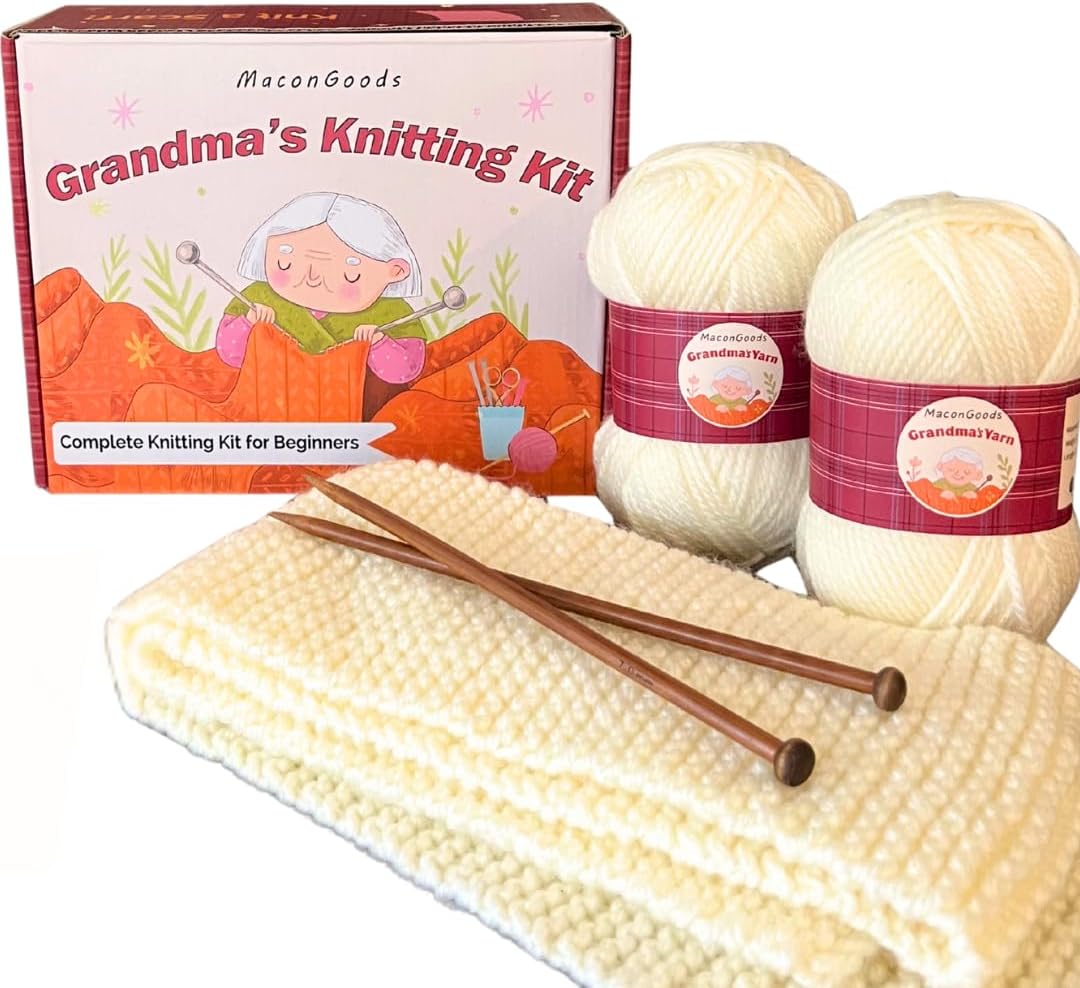
The name says it all: this one leans into the cozy, handmade spirit of learning from someone who has been knitting for decades. It is an inviting pick for gift-giving, whether you are surprising a friend who has mentioned wanting to learn or treating yourself to a fresh hobby.
A kit like this works best when you treat it as a launching pad. Use it to learn the foundations, then expand your collection with sizes and materials that suit the projects you fall in love with.
Pros
- Thoughtful, giftable presentation
- Convenient for first-timers
- Reduces shopping for accessories
- Encourages a clear starting point
Cons
- You may outgrow the needle selection
- Yarn quality varies between kits
- Confirm contents before gifting

Aeelike Knitting Kit for Beginners
The Aeelike kit is another full-service beginner bundle, and it suits people who like having a proper toolkit from day one. The extras that come with kits like this, including markers, needles for finishing, and measuring tools, are the things many first-time knitters forget they will need until they are halfway through a project.
If you are building a small, well-stocked project bag that you can carry anywhere, this is the style of purchase that makes it easy. Throw it in your tote, and you are ready for a long train ride or a quiet evening on the couch.
Pros
- Handy accessory collection
- Portable and organized
- Beginner-focused contents
- Good value compared to buying items separately
Cons
- Not every accessory will be used right away
- Needle range may be modest
- Review the product page for specifics
Needle Set or Kit: Which Makes More Sense?
Think of it this way. A needle set is an investment in flexibility, while a kit is an investment in convenience. If you already own some yarn and basic tools, a set gives you more needle choices for your money. If you own nothing and want to start tonight, a kit gets you there with fewer clicks. Neither path is wrong, and many knitters eventually own both. For an even deeper look at kits, our guide to the best knitting kits for beginners compares a wider range of options.
Want everything in one box? Browse beginner knitting kits with needles, yarn, and tools.
Browse Knitting KitsSide-by-Side Comparison of All Ten Picks
Now that you have met each option, here is a broader comparison to help you weigh them against each other. We kept the criteria practical: what the product is, who it suits, how forgiving it is for new hands, and how much flexibility it offers as you grow.
| Product | Style | Grip Level | Flexibility | Ideal Buyer |
|---|---|---|---|---|
| LIHAO 36 PCS Bamboo Set | Large bamboo set | Higher grip | Very high | Experimenters |
| BetyBedy 36PCS Bamboo Set | Large bamboo set | Higher grip | Very high | Collectors and explorers |
| Exquiss Bamboo Set | Circular + straight bamboo | Higher grip | High | Undecided beginners |
| ADULLPONY 7 Pairs | Bamboo pairs | Higher grip | Medium to high | Simplicity seekers |
| KnitPal Metal Circular Set | Metal circulars | Low grip, fast | High | Round and large projects |
| Boye Aluminum Straights | Single aluminum pair | Low grip | Low | Scarf makers |
| Granny Squirrel Kit | Complete kit | Depends on contents | Medium | Total newcomers |
| MaconGoods Grandma’s Kit | Complete kit | Depends on contents | Medium | Gift givers |
| Aeelike Kit | Complete kit with tools | Depends on contents | Medium | Toolkit lovers |
| Addi Aluminum Needles | Premium aluminum | Low grip, very smooth | Low to medium | Buy-once knitters |
Our Recommendations by Situation
- You are completely new and want the safest start: a bamboo set or a complete kit.
- You want to try everything: one of the large 36-piece bamboo sets.
- You want both straight and circular: the Exquiss set.
- You want a clean, simple collection: the ADULLPONY set.
- You like fast, smooth knitting: KnitPal circulars or Addi aluminum needles.
- You just want a scarf pair: Boye aluminum straights.
- You are shopping for someone else: MaconGoods or Granny Squirrel kits.
A Practical Buying Checklist
Before you click the buy button on any set, run through this short checklist. It takes a minute and prevents most of the disappointments people describe after a first purchase.
- Know your first project. A scarf calls for different needles than a hat or a blanket, so decide what you want to make first.
- Pick a yarn weight. Medium-weight yarn is the friendliest, and it tells you which needle sizes you need.
- Choose a material. Bamboo for grip and warmth, metal for speed and durability.
- Decide on a shape. Straight for simple flat work, circular for versatility, or a set that includes both.
- Count the sizes. Make sure the sizes you need are actually included, not just the headline piece count.
- Check the extras. Cases, stoppers, and markers are useful but not essential.
- Read recent reviews. Look for comments about smooth finishes, sturdy joins, and accurate size markings.
- Think about gifting. If you are buying for someone else, a kit often makes the best first impression.
Thinking About Value in Tiers
Rather than chasing the lowest price, it helps to think in tiers. The first tier is the exploration tier: large bamboo sets and complete kits that cost relatively little per piece and let you try everything. The second tier is the focused tier: a smaller, targeted purchase, such as a metal circular set or a single pair of aluminum straights, for someone who already knows what they like. The third tier is the premium tier: needles with a refined finish, like Addi aluminum, bought for long-term daily use.
Most knitters move through these tiers naturally. You start by exploring, you narrow your preferences, and eventually you treat yourself to something special. There is no rush to jump straight to the end, and there is no shame in staying in the exploration tier as long as you are enjoying yourself.
What Experienced Knitters Wish They Had Known
Ask a room of seasoned knitters about their first needles and you will hear familiar themes. Many wish they had started with a smoother, better-made pair instead of the cheapest option, because rough needles made learning harder than it needed to be. Others wish they had not bought so many sizes they never touched. Almost all of them say they wish they had been kinder to themselves in the first few weeks. The takeaway is balanced: buy decent, not extravagant, needles, choose a set that fits your first project, and give yourself permission to be a beginner.
You will also hear that the best needle is simply the one you love using. Preferences are personal, and what feels perfect to one person feels strange to another. If a needle becomes your favorite, that is the right needle for you, no matter what any review says.
Narrowed it down? Check current prices and customer reviews on top-rated knitting needle sets.
See Top-Rated Knitting NeedlesMatching Needles to Your First Projects
The best needles are the ones that fit the thing you actually want to make. A beautiful set sitting unused because it does not suit your project is no bargain. Here is how to line up the most popular beginner projects with the right style of needle, along with a few friendly tips for each.
Your First Scarf
A scarf is the classic starter project for a reason. It is just a long rectangle, so you practice casting on, the knit stitch, and casting off without any shaping to worry about. Medium-weight yarn on mid-sized needles is a lovely pairing. Straight needles are traditional, but a circular needle used flat works just as well and takes the weight off your wrists as the scarf grows longer. If you want a step-by-step companion, our tutorial on how to start knitting a scarf walks through the whole process.
Dishcloths and Washcloths
Small cotton squares are fantastic practice. They knit up fast, they are useful the moment you finish, and mistakes disappear into the texture. Because cotton has very little stretch and can feel stiff, a slightly smoother needle helps. Bamboo works well here, since cotton on metal can feel squeaky and fast, while bamboo adds just enough grip to keep you in control.
Hats
Hats are usually the second project people tackle, and they introduce knitting in the round. A circular needle with a shorter cable is the natural choice, and many knitters switch to double-pointed needles for the top where the stitches decrease. If you plan on making hats soon, choose a set that includes circulars, such as the Exquiss bamboo set or the KnitPal metal circulars.
Blankets
Blankets involve a lot of stitches, so circular needles with long cables are your best friend. They let the entire width of the blanket rest in your lap instead of straining against rigid straight needles. Metal circulars are especially popular here because the slick surface keeps the work moving along, but bamboo circulars are fine too, particularly if you prefer a quieter, warmer feel.
Cowls and Infinity Scarves
Cowls are knit in the round, so circular needles are a must. They make an excellent follow-up to a flat scarf because you already know the stitches and only need to learn to join your work. Chunky yarn and larger needles will finish one in an evening.
Socks and Mittens
These are a bit more advanced, but if the dream of handmade socks is what pulled you toward knitting, double-pointed needles or a small-circumference circular will be on your list soon. Treat this as a future upgrade rather than a starting requirement.
Project Matching Table
| Project | Best Needle Style | Suggested Material | Difficulty |
|---|---|---|---|
| Scarf | Straight or circular used flat | Bamboo or aluminum | Easy |
| Dishcloth | Straight | Bamboo | Easy |
| Hat | Circular, then DPNs for the crown | Bamboo or metal | Easy to medium |
| Blanket | Long circular | Metal or bamboo | Easy but time-consuming |
| Cowl | Circular | Either | Easy to medium |
| Socks | DPNs or small circular | Metal or wood | Medium to advanced |
Do Not Forget Cast On and Cast Off
Every project begins and ends with these two skills, and they interact with your needle choice in small ways. A grippier needle makes casting on feel more controlled, while a very slippery needle can make the loops looser. If you are still learning, take a look at our guides on how to cast on and how to cast off, and practice with scrap yarn until the motions feel natural.
A Gentle First-Week Practice Plan
Having the right needles is wonderful, but knowing what to do with them is better. Here is a relaxed, low-pressure plan for your first week. It is only a suggestion, so adjust it to your own pace.
- Day one: get comfortable. Hold the needles, wind your yarn into a ball if needed, and simply practice casting on a few times. Do not worry about neatness. Pull it out and try again.
- Day two: learn the knit stitch. Work a few rows on about twenty stitches. Concentrate on rhythm, not perfection.
- Day three: fix mistakes. Deliberately drop a stitch and practice picking it back up. It sounds scary, but it builds confidence enormously.
- Day four: try a swatch. Knit a small square, measure it, and see how your needle size works with your yarn.
- Day five: practice casting off. Finish your swatch and bind off neatly so your edge does not pucker.
- Day six: start the scarf. Cast on and begin a simple garter-stitch scarf you will actually wear.
- Day seven: rest and admire. Look at how much you have learned and plan what to make next.
The point of a plan like this is momentum. By the end of the week you will have used your new needles in several ways and discovered what you like. That experience will tell you far more about your preferences than any article, including this one.
Choosing a Second Project With the Same Needles
Once the first scarf is done, resist the urge to buy new gear immediately. Use the same needles for a simple textured piece, such as a ribbed headband or a seed-stitch washcloth. These projects introduce purl stitches and give you a new skill without changing your tools. If you decide to move on to hats, a circular needle will be the next logical addition.
Planning your first project? Find the needles and tools that fit it.
Shop Starter Needles and YarnCare, Storage, and Travel With Your Needles
Good needles can last for years, even decades, with a little attention. The habits below take almost no effort and will keep your set looking and feeling like new.
Caring for Bamboo
- Keep them dry. Bamboo does not love long exposure to moisture, which can roughen the surface.
- Avoid pressure. Do not sit on your needles or jam them into an overstuffed bag. Thin sizes bend and can snap.
- Smooth rough spots. If a tip gets a tiny snag, a gentle pass with very fine sandpaper, followed by a little beeswax or natural polish, restores the glide.
Caring for Metal
- Wipe them down. Hands leave oils and dust, so an occasional wipe with a soft cloth keeps the finish slick.
- Watch the tips. If a tip gets bent or dinged, replace the needle; a damaged tip can split yarn and snag stitches.
- Relax the cables. For circulars, soak the cable briefly in warm water to remove curls from storage.
Storage That Works
Most multi-piece sets ship with a case, and it is worth using it. Organized storage means you can see which sizes you own at a glance and stop buying duplicates. If your needles do not come with a case, a simple roll-up pouch or a zippered pencil bag does the job beautifully. Store needles flat or upright, and keep the cables of circular needles loosely coiled rather than tightly kinked.
Traveling With Knitting Needles
Knitting on the go is one of the great pleasures of the craft, and most people can do it without trouble. If you are flying, rules can vary by airline and airport, so always check current guidance before you pack. Our article on whether you can bring knitting needles on a plane explains the typical advice. As a general principle, circular needles and bamboo needles are widely considered easier to carry through checkpoints than long, sharp metal ones, which is another small point in their favor for travelers.
When to Replace Your Needles
Replace needles when they warp, crack, or develop rough patches that sanding cannot fix. Signs include stitches catching at the same spot every row, a visibly curved shaft, or a joint on a circular needle that snags yarn. Do not feel guilty about it; needles are tools, and a fresh pair can reignite your enjoyment of a stalled project.
Need a case or organizer? Browse knitting needle cases and project bags.
Shop Needle CasesMistakes to Avoid When Buying Your First Needles
Almost every knitter has a story about a purchase they regret. Learn from theirs and skip the frustration with the following common pitfalls.
1. Buying Needles Without Thinking About Yarn
Needles and yarn work as a team. Chunky yarn on tiny needles is miserable, and fine yarn on giant needles produces a fabric full of holes. Decide on your yarn weight first, or at least know which range you are aiming for, then choose needles that fit.
2. Choosing the Fanciest Option First
Premium needles are lovely, but they make more sense once you know your preferences. Starting a little more modestly lets you discover what you like without the pressure of a big investment.
3. Ignoring the Surface Finish
A needle with a rough or poorly polished finish snags yarn and tires your hands. Read reviews with an eye toward comments about smoothness and joins, especially on circular needles where the cable meets the tip.
4. Buying Only One Size
Single pairs are fine for a specific plan, but if you are exploring, you will quickly run into projects that call for a different size. A multi-size set or kit prevents repeated shopping trips.
5. Overlooking Needle Length
Very long straight needles can be unwieldy for small spaces and small hands. If you knit mostly on the couch or while commuting, shorter lengths or circular needles will feel more comfortable.
6. Skipping the Gauge Swatch
This one is not about buying, but it is the mistake that makes people blame their needles. Always make a small test swatch to confirm that your needle and yarn combination creates the fabric you want. If it does not, adjust your needle size rather than giving up.
7. Giving Up Too Early
Every knitter’s first rows look a little wobbly. Uneven tension, twisted stitches, and mysterious extra loops are universal rites of passage. Your needles are not at fault, and neither are you. Stick with it, and the rhythm arrives sooner than you would expect. If you need a gentle starting point, revisit our guide to how to start knitting.
Wondering About Crochet Instead?
Some people discover that they would rather work with a single hook than two needles. Both crafts are rewarding, and neither is objectively easier for everyone. If you are on the fence, our comparison of crochet vs. knitting and which is easier can help you decide before you buy anything.
Troubleshooting Common Beginner Frustrations
Even with perfect needles, new knitters hit the same speed bumps. Here is a quick troubleshooting list so you know that what you are experiencing is normal and fixable.
- Your fabric is getting wider or narrower. You are likely adding or losing stitches accidentally. Count your stitches at the end of every few rows until the habit sticks.
- Your edges look messy. Keep your tension consistent on the first and last stitch of each row, and avoid pulling too tightly after turning your work.
- Your stitches are too tight to move. Try a size up, relax your grip, or switch to a smoother needle.
- Your stitches look loose and sloppy. Try a size down, or choose a grippier material like bamboo.
- Yarn keeps splitting. A blunter needle tip or a smoother, plied yarn usually solves it.
- Your hands ache. Loosen your grip, take breaks, and consider lighter needles.
- The cable on your circular needle keeps tangling. Let it rest in warm water to relax, and keep the cable coiled loosely when you store it.
Almost none of these problems come from bad luck or lack of talent. They come from small adjustments you have not yet discovered, and the fixes are usually quick. Every knitter you admire has gone through the same stages, and every one of them started with a wobbly first row.
Building Your Collection Over Time
Resist the urge to buy everything at once. Start with one good set, use it for your first few projects, then let your actual needs guide further purchases. A typical journey might look like this: a bamboo set for learning, a pair of metal circulars for larger projects, a set of double-pointed needles for socks or mittens, and eventually a few premium pairs in your favorite sizes. This gradual approach keeps your spending intentional and your collection full of tools you genuinely use.
Avoid the guesswork. Start with a well-reviewed needle set made for new knitters.
Find Beginner Knitting NeedlesFrequently Asked Questions
What are the best knitting needles for a complete beginner?
For most people, a bamboo set is the easiest place to start. Bamboo is lightweight, warm, and gently grippy, so stitches stay on the needle while you build your tension. A multi-size set or a complete kit adds flexibility so you can match different yarns as you learn.
Are bamboo or metal needles better for beginners?
Bamboo is usually more forgiving because it holds stitches in place. Metal is smoother and faster, which some beginners love and others find slippery. If you are unsure, try a small bamboo set and a single pair of aluminum needles and see which feels better in your hands.
Should beginners use straight or circular needles?
Either works. Straight needles are simple and familiar for scarves and flat pieces, while circular needles are more versatile and can be used for both flat and round projects. A set that includes both is a smart way to discover your preference.
What size knitting needles should a beginner start with?
Medium sizes, roughly in the range of five to six millimeters, paired with medium-weight yarn are a common starting point. Always check your yarn label for its recommended range, and read our guide on what size knitting needles for beginners for more detail.
Is a big needle set worth it for a beginner?
It can be, especially if you like to experiment. A large set gives you many sizes, so you can try different yarns without buying individual needles. If you only plan to make one scarf, a single pair or a kit may be more practical.
Do I need a knitting kit or just needles?
Needles are enough if you already have yarn, a tapestry needle, and scissors. A kit is helpful if you want everything in one package, including accessories and often yarn. Our best knitting kits for beginners guide covers more bundles.
What yarn works best with beginner needles?
Smooth, medium-weight yarn in a light or solid color is easiest, because you can see each stitch clearly. Wool and wool blends add a bit of natural grip, which is helpful on slick metal needles. See our best yarn for beginner knitting list for specific ideas.
Why do my stitches keep slipping off the needle?
Slippery needles, loose tension, or very smooth yarn are the usual culprits. Switching to bamboo, using wool yarn, and keeping your fingers close to the needle tips all help. Needle stoppers on the ends of your needles can also protect your work when you set it down.
Can I use circular needles for flat knitting?
Yes. Simply knit across the row, turn your work, and knit back, just as you would with straight needles. Many knitters prefer this because the cable supports the weight of the fabric.
How do I know if my needle size is right?
Knit a small swatch and examine it. If the fabric feels stiff or looks tight, go up a size. If it looks loose and gappy, go down a size. The right size creates fabric with a pleasant drape and even stitches.
Can I take my knitting needles on a plane?
Rules differ by airline and airport, so check current guidance before traveling. Bamboo and circular needles are commonly seen as easier to travel with. We explain more in our article on bringing knitting needles on a plane.
How long do knitting needles last?
With basic care, they can last for many years. Metal needles tend to be the most durable, while bamboo can last a long time if kept dry and protected from bending. Replace any needle that warps, cracks, or develops snags you cannot smooth out.
Still have questions? Browse top-rated needles and read real customer feedback.
Read Customer ReviewsFinal Thoughts: Choosing the Right Needles for You
The best knitting needles for beginners are the ones that keep you picking up your project. For many people, that means a gentle, grippy bamboo set that forgives dropped stitches and offers enough sizes to explore. For others, it is a smooth aluminum needle that turns each row into a calming rhythm. And for anyone who would rather skip the shopping spree, a complete kit offers a friendly, ready-made start.
If you want our quick take: pick the Exquiss set if you want both straight and circular needles, a 36-piece LIHAO or BetyBedy set if you love variety, the ADULLPONY set for a tidy collection, KnitPal circulars for speedy larger projects, Boye aluminum straights for a classic scarf pair, Addi needles for a premium glide, and a Granny Squirrel, MaconGoods, or Aeelike kit for an all-in-one start.
Remember that your first set is a starting point, not a lifelong commitment. As you knit more, you will learn what you love, and your collection will naturally grow with you. Take a deep breath, cast on, and enjoy those first wobbly stitches. They are the beginning of something you will be proud of.
Ready to cast on? Pick your favorite set and start your first project today.
Shop Knitting Needles on Amazon