Best Yarn for Beginner Knitting: 10 Friendly Picks That Make Your First Projects Easier
Your very first skein can make learning to knit feel smooth and rewarding, or frustrating and splitty. Here is how to choose the right one, plus honest notes on ten popular options.
Nobody warns you about this when you pick up a pair of needles for the first time: the yarn matters nearly as much as the technique. Plenty of beginners decide they are “bad at knitting” when the real culprit is a skein that splits every third stitch, a color so dark they cannot see their loops, or a fuzzy novelty strand that swallows every mistake until it is too late to fix.
The good news is that choosing well is not complicated. A smooth, medium-thickness, light-colored yarn that costs a few dollars will teach you more than any fancy hand-dyed skein ever could. That is the whole secret, and the rest of this guide simply unpacks it so you can shop with confidence.
Below, we walk through what actually makes a yarn easy to learn on, how weight and fiber change the experience, and how to think about color. Then we look at ten popular beginner-friendly yarns one by one, covering who each is best for, what to love, and what to watch out for. By the end you should know exactly which skein belongs in your first project bag.
1. What Makes Yarn Beginner-Friendly
Before comparing brands, it helps to know what you are actually shopping for. “Beginner-friendly” is not marketing fluff. It describes a handful of real physical qualities that make a yarn forgiving when your hands are still figuring out tension, and that make mistakes easy to spot and fix.
Smooth, Plied Construction
Look closely at a strand of yarn and you will see that it is made of several thinner strands twisted together. These are called plies. A yarn with three or four tightly twisted plies is round and sturdy, so your needle tip slides cleanly between the strands rather than snagging one. A loosely spun single strand, by contrast, can split apart the moment your needle misses by a hair. For a new knitter, a firm plied yarn is far less frustrating.
A Little Bit of Grip, a Little Bit of Slide
Yarn that is too slippery, such as some glossy polyesters, slides off the needles before you have a chance to secure the stitch. Yarn that is too sticky, such as some rustic wools, fights you with every movement. The sweet spot is a yarn with a gentle grip that holds your stitches in place while still moving along the needle without a struggle. Most mid-range acrylics and acrylic-wool blends hit this balance nicely.
Stitch Definition You Can Actually See
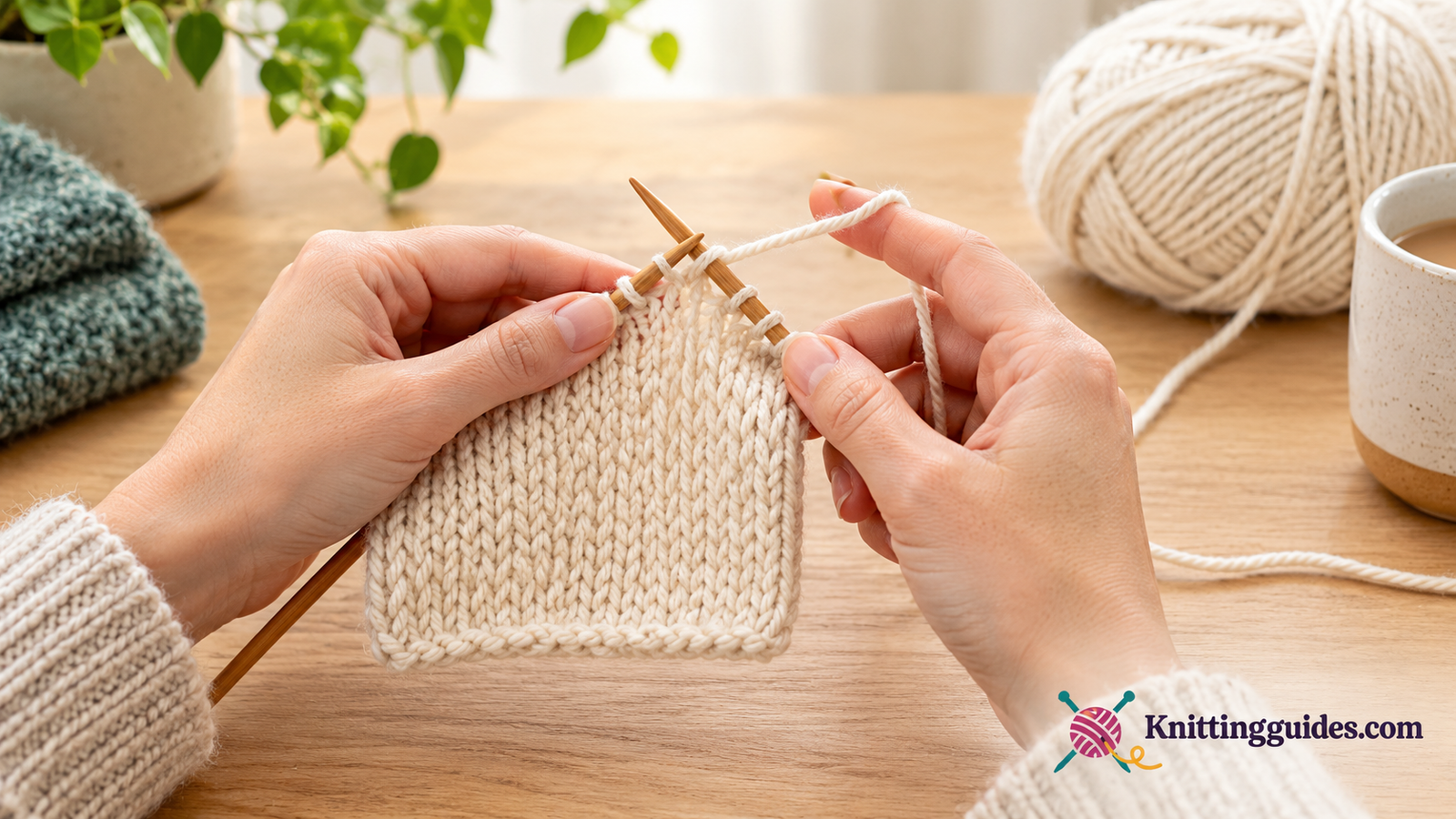
When you are learning, you need to look at your fabric and understand it. Where is that dropped stitch? Did you accidentally add a loop? Smooth yarns in light or medium colors show each stitch as a distinct little “V,” which makes diagnosing problems far easier. Fuzzy, hairy, or heavily textured yarns hide stitches, which feels cozy in a finished scarf but is a nightmare when you are trying to learn.
Forgiving When You Frog
Knitters use the word “frog” (rip it, rip it) to describe pulling out stitches to fix a mistake. You will do this a lot at first, and that is completely normal. Beginner-friendly yarn survives being unraveled and reknit without fraying, shedding, or felting. Sturdy acrylics and cotton hold up especially well here, while delicate mohair or very loosely spun wool can become fuzzy and weak after a few rounds of frogging.
An Affordable Price Tag
This one is practical rather than physical. Your first projects will be wobbly. Your edges will be uneven, you will accidentally increase stitches, and at some point you will probably abandon a project halfway through. Practicing on yarn that costs a few dollars a skein means you can learn without guilt. Save the splurge-worthy yarns for when your tension is steady and you know what you like.
Quick rule of thumb: Choose a smooth, light-colored, worsted-weight yarn in an easy-care fiber. If you can only remember one sentence from this guide, make it that one.
Beginner-Friendly Checklist
- Firm, round, multi-ply construction that resists splitting
- Smooth surface with no fuzz, loops, or novelty fibers
- Light to medium color so stitches stay visible
- Medium (worsted) weight or slightly thicker
- Machine-washable so finished practice pieces are actually useful
- Budget price so mistakes do not feel expensive
Common Beginner Frustrations (And the Yarn Behind Them)
It helps to connect the problems you will run into with the yarn causing them, because the fix is often as simple as swapping a skein. If your needle keeps poking through the middle of the strand, you are probably using a loosely spun or single-ply yarn. If your stitches slip off the needle constantly, the yarn may be too slick for your needle material. If your fabric looks like a blur and you cannot tell knit from purl, the yarn is either too dark or too fuzzy. And if your hands ache after twenty minutes, the yarn may be too stiff or too thin for your current tension.
None of these are signs that you are doing something wrong. They are signs that the tool does not match the task yet. Experienced knitters swap yarns constantly to get the exact behavior they want, and as a beginner you are allowed to do the same. Treat your first few skeins as experiments in what feels good rather than commitments.
It also helps to remember that you are training your hands as much as you are making fabric. Muscle memory takes time, and the right yarn shortens that learning curve by giving you clear feedback. When a yarn is easy to read and easy to handle, every row teaches you something. When a yarn fights you, you mostly learn frustration. That is why we put so much weight on the physical qualities above rather than on brand names.
Browse beginner-friendly knitting yarn on Amazon
See current options, colors and customer reviews for smooth, easy-care yarns.
Shop Beginner Yarn on Amazon2. Yarn Weight Explained (And Why It Matters More Than You Think)
“Weight” in the yarn world has nothing to do with how heavy a skein feels in your hand. It describes how thick the strand is. Thin strands make delicate, drapey fabric and take ages to knit. Thick strands make cozy, structured fabric and grow quickly. The industry uses a numbering system from 0 to 7, and you will see that number on nearly every label, usually printed on a little picture of a yarn ball.
The Standard Yarn Weight Categories
| Category | Name | Typical Feel | Beginner Rating |
|---|---|---|---|
| 1 | Fingering / Sock | Very thin, delicate | Challenging |
| 2 | Sport | Thin, light | Moderate |
| 3 | DK / Light | Light worsted, smooth | Fairly easy |
| 4 | Worsted / Aran | Medium, versatile | Ideal |
| 5 | Bulky / Chunky | Thick, cozy | Very good |
| 6 | Super Bulky | Very thick, fast | Good, with caveats |
| 7 | Jumbo | Arm-knitting thick | Specialty |
Why Worsted Weight Is the Gold Standard
Worsted weight, category 4, is the yarn that most knitting patterns, tutorials, and teachers assume you are using. It is thick enough that stitches are easy to see and easy to pick up if they drop, yet thin enough that you can knit a real, wearable project without it taking forever. Most beginner scarves, dishcloths, hats, and blankets are written for worsted weight, which means you will rarely hit a “wait, how do I adjust this?” moment.
Worsted yarn also pairs with the most common beginner needle sizes. If you are unsure which needles to pair with it, our guide on what size knitting needles for beginners walks through the numbers in plain language.
The Appeal of Bulky and Super Bulky
Thicker yarns have a special place in the beginner world. Because each stitch is large, your progress feels dramatic. A chunky scarf can come together in a weekend, and that early burst of “I made a thing!” is powerful motivation. The tradeoff is that thick yarn often calls for larger, heavier needles, and big stitches can feel awkward in small hands. Super bulky yarn can also be unforgiving when you misplace a stitch, since the gap is so noticeable.
Why to Skip Fingering Weight for Now
Fingering and lace weight yarns are gorgeous, and one day you will want to knit socks and shawls with them. But on tiny needles, with a thin strand that splits easily, your first stitches will feel like threading a needle in the dark. Come back to these when you are comfortable with the knit and purl basics.
How to Read a Yarn Label
A yarn label is a small cheat sheet, and learning to read it will save you money and frustration. Look for these details:
- Weight symbol: The numbered yarn ball, 0 to 7.
- Fiber content: Percentages of acrylic, wool, cotton and so on.
- Yardage and weight: How much yarn is in the skein. This matters more than the ounces when planning a project.
- Suggested needle size and gauge: A starting point, not a rule.
- Care symbols: Whether it can go in the washing machine and dryer.
- Dye lot number: Skeins with the same lot match in color. Buy enough from one lot for your whole project.
Tip: If a pattern calls for a specific yarn weight, you can usually substitute any yarn in the same category. Just check the gauge so your finished piece comes out the right size.
Gauge and Swatching in Plain Language
Gauge simply means how many stitches and rows fit into a measured square, usually four inches. It matters because two knitters using the same yarn and needles can produce fabric of different sizes, simply because one knits tightly and the other loosely. Patterns list a gauge so that your finished scarf, hat, or sweater comes out the intended size.
To check your gauge, knit a small square, called a swatch, in the yarn and needles you plan to use. Wash it the way you will wash the finished item, let it dry, then lay it flat and count the stitches across four inches. If you have more stitches than the pattern suggests, your knitting is tighter, so try larger needles. If you have fewer, try smaller ones.
For a simple garter stitch scarf, gauge is not critical, since a scarf can be a little wider or narrower and still work beautifully. This is one reason scarves, dishcloths, and blankets are such popular first projects. You can learn the habit of swatching on low-stakes pieces and save the precision for fitted garments later.
A Note on Substituting Yarn
You will eventually find a pattern that calls for a yarn you cannot find or cannot afford. Substitution is normal and usually fine, as long as you match the weight category and check the gauge. Compare yardage rather than ounces, since a lighter yarn may have more length in the same skein. Consider the fiber too, because swapping springy wool for stiff cotton changes how the finished piece drapes and behaves.
Shop worsted weight yarn for first projects
Medium-weight yarn is the easiest to see, count and fix.
View Worsted Weight Yarn3. Fiber Choices: Acrylic, Wool, Cotton and Blends
Fiber is the raw material your yarn is made from, and it shapes almost everything about the experience: how soft it feels, how it behaves on the needles, how it stretches, and how you wash it. Let us look at the main options beginners will meet.
Acrylic: The Beginner Default
Acrylic is a synthetic fiber, and it earns its popularity honestly. It is inexpensive, comes in a mind-boggling range of colors, resists moths, and goes in the washing machine. It tends to have a bit of stretch and a gentle grip, which suits learners. Modern acrylics are also far softer than the scratchy stuff your grandmother might remember.
Pros
- Very affordable
- Easy to wash and dry
- Huge color range
- Hypoallergenic for most people
Cons
- Less breathable than natural fibers
- Can pill over time
- Does not hold blocking as well as wool
Wool: Warm, Springy and Forgiving
Wool has a natural elasticity that evens out slightly uneven tension, which is wonderful for beginners whose stitches are still finding their rhythm. It is warm, breathable, and satisfying to work with. The downsides are cost, a tendency to feel scratchy for sensitive skin, and care instructions that often require hand washing. Superwash wool is treated to be machine washable, which removes the biggest inconvenience.
Pros
- Naturally springy and forgiving
- Warm and breathable
- Blocks beautifully
- Lasts for years
Cons
- Higher price
- Can feel itchy to some
- Often needs gentle care
Cotton: Cool, Sturdy and a Little Stiff
Cotton has almost no stretch, which makes it feel stiff and tiring on your hands, especially for long sessions. That same quality makes it ideal for dishcloths, washcloths, and warm-weather items that need to hold their shape. Many beginners enjoy cotton for small practice swatches because it is cheap and the finished pieces are immediately useful. Just take breaks, since the lack of give can strain your wrists.
Pros
- Machine washable and durable
- Great for kitchen and bath items
- Shows stitches clearly
Cons
- No stretch, harder on hands
- Uneven tension shows more
- Can feel heavy when wet
Blends: The Best of Both Worlds
Blends combine fibers to balance cost, comfort, and care. A classic example is an acrylic and wool mix, where the acrylic keeps the price down and makes the yarn washable, while a touch of wool adds warmth and springiness. For many beginners, a blend is the sweet spot between the budget feel of pure acrylic and the cost of pure wool.
A Simple Fiber Decision Guide
- Want the cheapest, easiest start? Choose acrylic.
- Want something warmer and springier? Choose an acrylic-wool blend.
- Making dishcloths or summer items? Choose cotton.
- Ready to treat yourself? Choose a natural wool such as a Peruvian highland wool.
- Sensitive skin? Lean toward soft acrylics or blends and test against your neck or wrist first.
Superwash Wool and Sensitive Skin
If you see the word “superwash” on a wool label, it means the fiber has been treated so that the scales on each hair do not lock together in the wash. The result is wool you can usually machine wash, which makes it far more practical for beginners and for gifts such as baby items. The tradeoff is that superwash wool can feel slightly different, often a bit smoother and a touch less grippy, and it can grow if it is stretched while wet.
When it comes to itchiness, the story is more individual than most people expect. Some people find any wool uncomfortable, while others only dislike coarser, thicker wool fibers. Softer acrylics, polyester plush yarns, cotton, and blends with a small amount of wool tend to feel gentle on most skin. The most reliable test is to hold the yarn against your neck or inner wrist for a minute. If it tickles then, it will tickle after it is knit into a cowl.
Three Fiber Myths Worth Dropping
Myth one: acrylic is always scratchy. Older, bargain acrylics earned that reputation, but many modern lines are noticeably soft, especially after a wash. Myth two: wool is only for experts. Wool’s natural spring is actually kind to beginners, and the main barrier is cost and care, not skill. Myth three: natural always beats synthetic. Natural fibers are wonderful, but synthetics are easier to wash, cheaper, and safer for people with allergies or tight budgets. The right fiber is the one that suits your project and your life.
Compare acrylic, wool and cotton yarns
Find the fiber that feels best in your hands.
Compare Yarn Fibers on Amazon4. Color, Texture and Visibility: The Overlooked Beginner Factor
Ask any experienced knitting teacher what beginners get wrong when buying yarn, and color comes up almost every time. It is easy to fall for a gorgeous black, navy, or deep forest green, only to discover you cannot see your stitches once you start knitting. Color and texture are not just aesthetic choices when you are learning. They are practical ones.
Light and Medium Colors Win
Cream, pastel, light gray, soft blue, and bright medium tones reveal the structure of your stitches in the light and shadow of each loop. Dark colors absorb that detail. When you are trying to count stitches, find a dropped loop, or figure out whether you just knit or purled, you want every advantage. If you adore dark colors, wait until your second or third project, and knit near a bright window or lamp.
Solid vs. Variegated vs. Ombre
Solid colors are the clearest teachers. Variegated yarns, which blend several colors along the strand, create beautiful random patterning but can visually hide errors. Ombre yarns, which shift gradually from one shade to another, are a fun middle ground. They keep the surface smooth while rewarding you with a color change as you work. Many beginners find that a little color movement keeps them motivated through a long garter-stitch scarf. If you want to explore this, see section 10 for two options.
Texture Traps to Avoid
Avoid these until you are comfortable:
- Eyelash and faux fur yarns: Stitches disappear entirely into the fuzz.
- Boucle and loopy novelty yarns: Loops catch the needle and hide mistakes.
- Metallic or ribbon yarns: Slippery and prone to splitting.
- Very fine mohair: Beautiful, but impossible to frog neatly.
The Photo Test
Here is a trick: before buying, look at a close-up photo or the skein in person and ask yourself whether you could count the plies of the strand. If the surface is crisp and defined, you will be able to see your knitted stitches too. If the strand looks like a cloud, save it for a later project.
Good to know: Lighting changes everything. Knitting a dark yarn in dim evening light is a recipe for eye strain and dropped stitches. If you do choose dark, knit under a bright, natural-spectrum lamp.
Choosing Color for the Person You Are Knitting For
Many beginners knit their first projects as gifts, which adds another layer to the color decision. For children, bright, saturated shades are fun but check that they are easy to wash and durable. For a friend whose taste you know, neutral shades like oatmeal, gray, and soft green are rarely wrong and match nearly any wardrobe. For a baby, pale pastels and creams are traditional, though the practical choice is a washable yarn in any soft color a parent will appreciate.
If you are knitting for yourself, consider choosing the color that makes you want to pick up your needles. Motivation is a real factor in finishing projects. A color that makes you smile on a gray afternoon is worth more than a technically perfect choice that sits untouched in a basket.
Find light, smooth yarn colors that show every stitch
Pastels and mid-tones make learning noticeably easier.
Browse Yarn Colors on Amazon5. Quick Comparison: Our 10 Best Yarns for Beginners at a Glance
Here is a side-by-side snapshot of all ten yarns covered in this guide. Details like fiber and weight are the typical specifications for each line. Colors and skein sizes vary, so always check the product listing for the exact option you are buying.
| Yarn | Fiber | Typical Weight | Best For | Price Feel |
|---|---|---|---|---|
| Red Heart Super Saver | 100% acrylic | Worsted (4) | Practice swatches, blankets | Very low |
| Lion Brand Wool-Ease | Acrylic and wool blend | Worsted (4) | Scarves, hats, all-purpose | Low to mid |
| Lion Brand Hometown | Acrylic | Super bulky (6) | Chunky throws, quick scarves | Low |
| Wool-Ease Thick & Quick | Acrylic and wool blend | Super bulky (6) | Fast scarves, cowls, hats | Mid |
| Feels Like Butta | Plush polyester | Bulky and up | Cuddly blankets, soft gifts | Mid |
| Knit Picks Wool of the Andes | Peruvian wool | Worsted (4) | Upgrading to natural fiber | Mid to high |
| Lion Brand Mandala Ombre | Acrylic | Light (3) | Color-changing scarves, shawls | Mid |
| MAQIHAN Multicolor Skeins | Acrylic | Check listing | Swatching, small projects | Low |
| Lily Sugar’n Cream | 100% cotton | Worsted (4) | Dishcloths, washcloths | Low |
| Basic Stitch Anti-Pilling | Acrylic-based | Worsted (4) | Everyday wearables | Low to mid |
Our Quick Recommendations
- Best overall for first projects: Lion Brand Wool-Ease
- Best on a tiny budget: Red Heart Super Saver
- Best for dishcloths and kitchen items: Lily Sugar’n Cream
- Best for chunky, fast results: Wool-Ease Thick & Quick
- Best for softness: Feels Like Butta
- Best natural fiber upgrade: Knit Picks Wool of the Andes
- Best for color lovers: Lion Brand Mandala Ombre
If you are still deciding whether to buy yarn on its own or all at once, our roundup of the best knitting kits for beginners bundles needles, yarn, and instructions together, which can simplify your first purchase.
How We Evaluated These Yarns
To keep this guide useful rather than just a list, each yarn was assessed against the same set of practical questions. How smooth and round is the strand, and is it likely to split? Does it show stitches clearly? How forgiving is it when you pull it out and reknit? What does it feel like in the finished fabric? How easy is it to care for? And finally, does the price make sense for someone who is still learning?
We also considered the kind of knitter each yarn suits. A yarn that is perfect for a patient hobbyist making a baby blanket may not be the right choice for someone who wants to finish a scarf by Sunday. That is why the list covers budget, soft, chunky, natural, and colorful options rather than naming a single winner for everyone.
Finally, keep in mind that yarn lines change over time. Colors are discontinued, formulas are tweaked, and skein sizes shift. Always read the current product listing and recent customer reviews before you buy, and use the information here as a guide to what to look for.
See today’s pricing on top beginner yarns
Prices and color availability change often, so check the latest on Amazon.
Check Current Prices6. Budget Workhorses: Red Heart Super Saver and Lily Sugar’n Cream
Every craft store has a wall of inexpensive, dependable yarn that has taught generations of knitters and crocheters. These two are a big part of that story. They are not the softest or the fanciest, but they are honest, durable, and wonderfully forgiving of beginner mistakes.
Red Heart Super Saver
If there is a default “first yarn” in the English-speaking world, this is it. Super Saver is a 100% acrylic worsted weight yarn sold in large skeins at a very low price. It comes in a huge range of solid colors, and many knitters have a cupboard full of it.
On the needles it behaves predictably. The four-ply construction is round and firm, so your needle rarely splits the strand. It has a little bit of grip, which keeps new stitches from slipping off, and it holds its shape well. It also survives repeated frogging better than many more delicate yarns, which matters when you are rewinding the same ten rows for the fifth time.
The honest downside is feel. Super Saver is on the crisp side, particularly before washing, and it will not give you the squishy softness of premium yarns. For a baby blanket or a scarf worn against the neck, many people prefer something softer. For learning stitches, making practice swatches, crafting donation blankets, or creating durable pieces like dog beds and tote bags, it is hard to beat for the money.
Pros
- Extremely affordable
- Large skeins, so fewer purchases
- Firm plies resist splitting
- Very durable and machine washable
- Wide color selection
Cons
- Feels firmer than premium yarns
- Not ideal for sensitive skin
- Can look a bit plain compared to blends

Red Heart Super Saver
The classic budget yarn for practice swatches and sturdy projects.
Check Price on AmazonLily Sugar’n Cream Cotton
Sugar’n Cream is the dishcloth yarn that practically every knitter eventually meets. It is a 100% cotton worsted weight yarn with a slightly rustic, textured feel, available in solid colors and cheerful variegated and striped options. It is inexpensive, machine washable, and gets softer with every wash.
Cotton behaves very differently from acrylic on the needles. It has almost no stretch, so your hands may feel tired if you knit for a long stretch. It also shows uneven tension more honestly, which can feel like a harsh teacher at first, but it also trains you to relax your grip and settle into a steady rhythm. Many knitters find that after a few dishcloths, their tension has improved noticeably.
The finished pieces are the real draw. A dishcloth is a small, quick project with a clear purpose, and finishing one gives you a satisfying “I actually made something useful” moment. Simple projects like these also give you practice with skills like casting on and binding off. If you are ready to learn those, our walkthroughs on how to cast on knitting will get you started.
Pros
- Perfect for dishcloths and washcloths
- Durable and machine washable
- Gets softer with washing
- Great for warm-weather items
Cons
- No stretch, tiring for hands
- Not springy or forgiving
- Not ideal for cozy winter wearables
A Simple Practice Plan Using Budget Yarn
One of the smartest things a new knitter can do is plan a few small practice pieces with inexpensive yarn before starting a “real” project. Begin with a flat square in garter stitch, knitting every row, until the motion feels automatic. Move on to a stockinette square, alternating knit and purl rows, and notice how the fabric curls at the edges. Then try a simple ribbed square for a stretchy texture.
Finish with a dishcloth, which combines all of those skills in a useful object. By the time you have made three or four small pieces, you will have a clearer sense of your tension, your preferences, and the kinds of yarn you enjoy. That knowledge is worth far more than the few dollars the practice yarn cost.

Lily Sugar’n Cream Cotton
The dishcloth favorite that rewards you with a useful finished piece.
Check Price on AmazonWhich Budget Yarn Should You Pick?
Choose Super Saver when you want maximum value, plenty of yarn, and a firm, durable result. Choose Sugar’n Cream when you want to make dishcloths, washcloths, or summer items and do not mind the lack of stretch. Many beginners buy one of each, since the cost is so low, and quickly learn which feels better in their own hands.
7. The Softest Picks: Wool-Ease, Feels Like Butta and Basic Stitch
If the budget workhorses feel too firm, this group is for you. These yarns lean toward comfort, so the things you make will be pleasant to touch and wear, which matters when you are knitting gifts or items that sit against your skin.
Lion Brand Wool-Ease
Wool-Ease is arguably the best all-round choice for most beginners, and it is the one we would put in the hands of a friend who just asked “what should I buy?” It is a worsted weight blend of acrylic and wool, so you get some of the warmth and springiness of wool with the easy care and price of acrylic.
The strand is smooth and plump, with a soft, slightly heathered look in many colors. It has a pleasant bounce, which gently evens out slightly uneven stitches. It shows definition beautifully, so garter stitch ridges and stockinette Vs are easy to read. And because it is machine washable, finished scarves, hats, and blankets are practical and easy to maintain.
It costs a little more than the cheapest acrylics but remains very affordable. The only real cautions are that it can pill slightly with heavy wear, and that the wool content may feel mildly warm for those who run hot. For the vast majority of first projects, it is the right answer. It is particularly good for a first scarf, and our guide on how to start knitting a scarf pairs naturally with it.
Pros
- Soft with a gentle spring
- Smooth and easy to see stitches
- Machine washable
- Wide range of colors
- Excellent value
Cons
- May pill with heavy wear
- Costs a bit more than basic acrylic
- Wool content may bother very sensitive skin

Lion Brand Wool-Ease
Our top all-round pick for first scarves, hats and blankets.
Check Price on AmazonLion Brand Feels Like Butta
The name says it all. Feels Like Butta is a plush, velvety polyester yarn known for an almost silky, cuddly hand. It is one of the first yarns people reach for when making baby blankets, cozy throws, and gifts meant to be snuggled.
It is gorgeous to hold, but it asks a little more of a beginner. The slick, smooth surface can slide on some needles, particularly very glossy metal ones, and the soft strand can split if you rush. Wooden or bamboo needles offer more grip and generally pair better with slippery fibers. Go slowly, keep your tension relaxed, and the reward is a finished piece that feels remarkable.
We would suggest this as a “second or third project” yarn, or a first yarn for a patient beginner who is motivated by the end result. Always check the listing for the exact weight and yardage of the skein you are choosing.
Pros
- Incredibly soft and cuddly
- Beautiful drape and shine
- Great for baby items and throws
- Machine washable
Cons
- Slippery on some needles
- Can split if rushed
- Slightly harder to learn on than firmer yarns

Lion Brand Basic Stitch Anti-Pilling
Pilling, those little fuzzy balls that appear on well-loved knitwear, is one of the most common complaints about budget yarns. Basic Stitch Anti-Pilling is designed to address exactly that, with a construction aimed at keeping the surface smooth through wear and washing.
For a beginner, this is a practical choice if you plan to make wearables such as hats, cowls, and scarves that will see regular use. It is a worsted weight yarn with a clean, smooth look and good stitch definition, and it generally feels softer than the most basic acrylics. As with any yarn, double check the fiber content and yardage on the listing before you buy.
Pros
- Designed to resist pilling
- Smooth and easy to knit
- Good for everyday wearables
- Easy care
Cons
- Color range can be more limited
- Less warmth than wool blends
- Slightly higher price than the cheapest options
Soft Yarn Tips for Cleaner Knitting
Softer, plusher yarns tend to behave a little differently from firm ones, so it is worth adjusting your habits. Use needles with a slightly blunt tip so you do not pierce the strand. Choose wood or bamboo if the yarn is slick. Keep your tension even, since plush yarns can look sloppy when stitches vary in size. And pay attention to the first row after casting on, which is where slippery yarns most often cause trouble.
When you are working with a very soft yarn, it is also worth checking your work more frequently. Soft textures can hide a missed stitch for several rows, so count your stitches at the end of each row at first. A quick count takes seconds and saves the sinking feeling of discovering an error ten rows down.
Choosing Among the Soft Options
If you want warmth and a touch of natural bounce, Wool-Ease is the clear pick. If you want pure cuddliness for a gift and do not mind going slowly, Feels Like Butta is the indulgent choice. If you plan to wear what you make often and care about a clean surface after many washes, Basic Stitch Anti-Pilling deserves a look. Whichever you choose, swatch first so you know how it behaves before committing to a whole project.

Lion Brand Basic Stitch Anti-Pilling
A smooth, low-fuzz choice for hats, cowls and everyday scarves.
Check Price on Amazon8. Chunky Yarns for Fast Wins: Hometown and Wool-Ease Thick & Quick
There is a particular kind of joy in watching a project grow quickly. Super bulky yarn delivers that in spades. With thick strands and large needles, a scarf or cowl can be finished in a few evenings, and those early wins build confidence. Both of these yarns are popular for exactly that reason.
The Upsides and Quirks of Super Bulky Yarn
Before we meet the yarns, it helps to know what chunky knitting feels like. Each stitch is large and easy to see, so errors are visible and simple to correct. Projects finish fast, which is wonderful for motivation. On the other hand, you need larger needles, which can feel heavy and awkward at first. Mistakes stand out in the fabric, and the finished piece can be dense and warm, so it suits scarves, cowls, and throws better than lightweight garments.
Lion Brand Hometown
Hometown is a super bulky acrylic yarn sold in generous, rounded skeins that look as good on a shelf as they do on the needles. It comes in a range of rich, saturated colors and has a smooth, plush look when knitted up.
Because it is so thick, it is an excellent choice for a first chunky scarf or a quick gift. The stitches are easy to see, and the yarn is easy to handle once you get used to the larger needles. It is also affordable for the amount of fabric you get, which suits beginners who want a speedy project without spending much.
Keep in mind that its thickness can make it feel a little stiff in the hand compared with softer blends, and the large strand can split slightly if you knit with a lot of force. Keep a relaxed grip and let the needles do the work.
Pros
- Very fast results
- Easy-to-see stitches
- Affordable for the volume of yarn
- Machine washable
Cons
- Needs large needles
- Mistakes are very visible
- Can feel dense and warm

Lion Brand Hometown (Super Bulky)
Chunky, colorful yarn for scarves and throws that finish in a weekend.
Check Price on AmazonLion Brand Wool-Ease Thick & Quick
Think of this as the chunky sibling of Wool-Ease. It carries the same acrylic and wool blend, so it brings along that gentle bounce and warmth, but in a super bulky weight designed for big, quick projects. It is one of the most popular yarns for first scarves and chunky hats.
The strand is soft, with the slightly springy character of wool, and the finished fabric is plush and warm. Because the blend includes wool, it tends to feel more cozy and breathable than pure acrylic super bulky yarns, and its elasticity helps your stitches settle into an even fabric. It is machine washable, which keeps care simple.
The main considerations are cost, since super bulky yarns use a lot of material and you may need multiple skeins, and needle size. You will want large needles, and those can feel unwieldy until you adapt. If you are unsure about sizing, this is where reading our guide on the best knitting needles for beginners pays off.
Pros
- Soft, warm and springy
- Great for quick scarves and hats
- Easy to see and fix stitches
- Machine washable
Cons
- Uses a lot of yarn per project
- Requires large needles
- Costs more than basic acrylic
Tips for Knitting With Chunky Yarn
Chunky knitting has its own quirks. First, support the weight of your project in your lap rather than letting it hang from your needles, which strains your wrists. Second, take your time with the first row after casting on, since thick yarn can create a tight, bulky edge. Casting on loosely helps avoid a scarf that curls inward at the bottom.
Third, measure your project as you go, because chunky fabric grows quickly and can be wider than you intended. Finally, remember that thick yarn needs plenty of room to move. Do not hold your stitches so tightly that they refuse to slide along the needle. If you feel yourself gripping hard, shake out your hands, roll your shoulders, and start again.

Lion Brand Wool-Ease Thick & Quick
The cozy chunky favorite for first scarves, cowls and hats.
Check Price on AmazonIs Chunky Yarn Right for Your First Project?
If you want fast results and love bold, cozy accessories, absolutely. If you plan to make something fitted or delicate later, you will eventually move to thinner yarn. Many knitters begin with chunky yarn for motivation and then transition to worsted weight as their skills grow.
9. A Natural Fiber Step Up: Knit Picks Wool of the Andes
At some point, usually after a project or two, a lot of knitters feel a pull toward natural fibers. They want to know what real wool feels like. If you are ready to treat yourself without spending a fortune, Wool of the Andes is a well-loved starting point.
What It Is
Wool of the Andes is a worsted weight yarn made from Peruvian highland wool. It has a classic, slightly rustic character, with a springy, smooth strand and a matte, natural look. It is sold in smaller skeins than the budget acrylics, so you will usually need several for a larger project, which is worth planning ahead for.
How It Feels to Knit
This yarn is a joy to work with. The wool has natural elasticity, so your stitches bounce back into shape and smooth out in the fabric. It has just enough grip to stay put on the needles, and it blocks beautifully, meaning a gentle wash and shaping can transform slightly uneven knitting into polished fabric. That is a lovely experience for a beginner, since it makes your work look better than you may expect.
Wool also has a warmth and breathability that acrylic cannot fully match. A hat or scarf knit in real wool feels different. It adapts to temperature, wicks moisture, and tends to last for years.
The Tradeoffs
Wool of the Andes is not for everyone. It is more expensive than acrylic, and the wool can feel mildly scratchy against very sensitive skin, so it suits hats, mittens, and sweaters better than baby items. Care also requires a bit more attention. Check the label, but expect to hand wash or use a gentle cycle and dry flat. It is also not the best yarn for frogging again and again, since wool can become slightly fuzzy.
That said, if you are curious about natural fibers, it is an approachable, fairly priced introduction that many knitters never outgrow.
Pros
- Springy, forgiving natural wool
- Blocks beautifully
- Warm and breathable
- Rich color range
Cons
- Higher price than acrylic
- Needs gentler care
- May feel scratchy to sensitive skin
- Smaller skeins mean buying more
Smart move: Learn the basics on an inexpensive acrylic or blend, then reward yourself with a natural wool for your first “real” project once your stitches feel steady.
Wool Care and Blocking Basics
Natural wool rewards a little extra care, and learning it is a milestone in every knitter’s journey. Blocking is the process of gently wetting a finished piece, shaping it to the right dimensions, and letting it dry flat. It relaxes the fibers, evens out stitches, and can make a beginner project look remarkably polished.
To block a small item, soak it in cool water with a mild wool wash for about fifteen minutes. Press out the water by rolling the piece in a clean towel, never by wringing it. Then lay it flat, nudge it into shape, and let it dry completely. Avoid hot water and agitation, which can cause wool to felt and shrink. Following these steps will keep your handmade items looking good for years.
Choosing Colors in Wool
Wool takes dye in rich, slightly muted tones that look warm and natural, and heathered shades add subtle depth. Just as with any yarn, lighter shades show stitches more clearly, so if this is one of your first natural-fiber projects, a mid-tone or light color is the kinder choice. Save the deep, dark shades for when you are confident reading your stitches.

Knit Picks Wool of the Andes
A friendly first step into natural Peruvian wool.
Check Price on Amazon10. Color-Changing Yarns: Mandala Ombre and MAQIHAN Multicolor Skeins
Not everyone wants to knit with plain, solid colors, and that is perfectly fine. A little color play can keep a long project exciting. Here are two very different ways to bring color into your first knitting without the headaches of busy patterns.
Lion Brand Mandala Ombre
Mandala is a long-running favorite for color lovers. It is a light-weight acrylic that shifts through a graduated range of colors, so as you knit, your project quietly changes shade without you doing anything. The effect is striking, especially in simple stitches like garter stitch, where the color transitions get center stage.
Because the strand is a thinner weight than worsted, it works well for light shawls, wraps, and airy scarves. The cakes are generous, so a single one can often make a scarf. Because the yarn does the visual work, a basic pattern looks impressive, which is a tremendous confidence boost for newer knitters.
The tradeoff is that thinner yarn means smaller stitches and slower progress, and the color changes can make it a little harder to spot errors than a plain solid. We would suggest it for your second or third project, once you are comfortable with garter stitch. Pair it with simple patterns and let the color shine.
Pros
- Beautiful automatic color shifts
- Large cakes for big projects
- Makes simple stitches look special
- Easy care
Cons
- Thinner weight, slower progress
- Color changes can hide errors
- Better for second or third project

Lion Brand Mandala Ombre
Self-shifting color for scarves and shawls with almost no effort.
Check Price on AmazonMAQIHAN Multicolor Acrylic Yarn Skeins
This one is a fun, low-risk option: a set of fifteen small 20 gram skeins in a mix of colors. Instead of buying a single large skein and committing, you get a rainbow of little balls to experiment with.
The set is ideal for swatching, practicing stitches, trying color-blocking, and small projects such as coasters, ornaments, and tiny accessories. Small skeins also make it easy to practice joining a new color, a skill you will use constantly in future projects. Because the yarn is inexpensive, you can experiment freely without worrying about waste.
The limitations are the obvious ones. Each skein is small, so it will not cover a large project, and the quality and weight of budget multipack yarn can vary, so read the listing details and customer reviews. Treat it as a practice and play set rather than your main project yarn.
Pros
- Many colors at a low price
- Perfect for swatching and practice
- Great for small projects
- Low risk to experiment
Cons
- Small skeins limit project size
- Quality and weight can vary
- Many joins if used for larger pieces
Working With Color Changes Like a Pro
Whether you are using a self-shifting ombre yarn or joining several colors from a multipack, a few habits will make the process smoother. When you reach the end of a color, leave a tail of about six inches so you can weave it in later. Try to join new colors at the edge of your work rather than the middle, since that hides the join and keeps the fabric neat.
With ombre yarn, resist the urge to pull out and rearrange the colors if a transition does not land where you expected. Part of the charm is the surprise. If you are working on a project that needs two matching pieces, such as a pair of mittens, wind your ball so that you start both pieces at the same point in the color sequence.
Is a Multicolor Set Worth It for Beginners?
For practice, yes. A mini-skein set lets you learn color changes, test stripes, and try different stitches without a big commitment. It also helps you discover which colors you actually enjoy knitting with. If you are aiming for a larger project, a single larger skein or cake in one color or an ombre will give you a more consistent result with fewer ends to weave in.

MAQIHAN 15 x 20g Acrylic Yarn Set
A colorful practice set for swatches and small projects.
Check Price on Amazon11. Pairing Yarn, Needles and First Projects
Choosing the yarn is only one third of the equation. The needles you use and the project you pick will determine whether the experience is smooth or stressful. Here is how to line the three up.
Match Needles to Yarn Weight
Every yarn label suggests a needle size, and it is a sensible place to begin. As a general guide, worsted weight yarn is often knit on mid-size needles, while super bulky yarn calls for much larger ones. Beginners often do best with needles that are slightly larger than the label suggests, since looser stitches are easier to insert the needle into. Our dedicated guide to what size knitting needles for beginners covers sizing in detail.
Match Needle Material to Yarn Texture
Material changes how yarn behaves:
- Bamboo and wood: Slightly grippy, ideal for slippery yarns and beginners generally.
- Metal: Fast and smooth, but can let stitches slide off with slick yarn.
- Plastic: Lightweight and affordable, a good all-round option for chunky yarn.
If you are unsure what to buy, our roundup of the best knitting needles for beginners compares popular options.
Which Yarn for Which First Project?
| Project | Recommended Yarn | Why It Works |
|---|---|---|
| Practice swatches | Red Heart Super Saver or MAQIHAN set | Cheap, so there is no pressure |
| First scarf | Wool-Ease or Basic Stitch | Smooth, soft and easy to see |
| Chunky scarf or cowl | Thick & Quick or Hometown | Finishes in a weekend |
| Dishcloths | Sugar’n Cream | Cotton is absorbent and sturdy |
| Baby blanket or soft gift | Feels Like Butta | Cuddly and machine washable |
| Hat and mittens | Wool of the Andes | Warm and springy |
| Color-changing shawl | Mandala Ombre | Color does the work for you |
Start With the Basics, Then Branch Out
If you are still learning the very first steps, our article on how to start knitting covers everything from holding the needles to your first rows. Once you have that foundation, a simple scarf is the classic first project, and the yarns above make it easy to start.
How Much Yarn Should You Buy?
Beginners often underbuy and then discover that the exact color is out of stock. For a scarf, check the pattern for yardage, then add a small cushion. Buy all of your skeins at once so they share a dye lot, since colors can differ slightly between batches. If you are unsure, buy one extra skein and keep the receipt in case your store lets you return unused yarn.
A Gentle First-Week Learning Plan
If you are not sure how to pace yourself, a simple plan can keep you moving without burning out. On the first day, practice holding the needles and yarn, and cast on a small number of stitches. Do not worry about neatness. On the second and third days, knit short sessions of fifteen to twenty minutes, knitting every row to build a garter stitch square.
By the fourth or fifth day, try to count your stitches at the end of each row and fix any extras or dropped stitches. On the sixth day, learn to bind off, so your first square becomes a finished object. On the seventh day, start a small project, such as a dishcloth or a short scarf. Short, regular sessions beat long, exhausting ones, because your hands learn more when they are relaxed.
Keep a Small Yarn Notebook
Here is a habit that pays off quickly: jot down every yarn you try, with the brand, fiber, weight, needle size, and a one-line note about how it felt. After a few projects you will see patterns in what you enjoy, such as whether you prefer springy wool or smooth acrylic, thin or chunky. It turns shopping from guesswork into informed choice and helps you spot yarn you will love before you buy it.
Gather your yarn and needles in one go
Browse knitting needles that pair well with beginner yarn.
Shop Knitting Needles12. Common Mistakes, Care and Storage
Even with the perfect yarn, a few avoidable missteps can trip up new knitters. Here is what to watch for, plus how to look after your yarn and finished work.
Mistakes Beginners Make When Buying Yarn
- Choosing dark colors first. You will struggle to see your stitches. Start light.
- Buying fuzzy novelty yarn. It looks beautiful on the shelf but hides every stitch.
- Going too thin. Fingering weight tests patience. Begin with worsted or bulky.
- Splurging immediately. Expensive yarn makes mistakes feel costly. Practice first.
- Ignoring dye lots. Mismatched skeins can create visible stripes.
- Forgetting yardage. Always check you have enough for the whole project.
- Not swatching. A small test square tells you how the yarn behaves and what size it will make.
Habits That Help You Succeed
Swatch every new yarn. It takes ten minutes and prevents hours of regret. Keep your tension relaxed, since tight knitting makes yarn harder to insert the needle into and tires your hands. Take breaks, especially with stiff fibers like cotton. And remember that frogging is a normal part of knitting. Everyone does it.
Caring for Finished Items
Always follow the care symbols on the label. As a general rule, acrylic and acrylic-wool blends are typically machine washable, cotton washes well and softens over time, and natural wool prefers a gentle cycle or hand wash and flat drying. When in doubt, wash a swatch first so your finished project is not the test subject.
When you finish a project, you will also need to secure your last stitches properly. If you have reached that stage, our guide on how to cast off knitting explains how to finish cleanly.
Storing Yarn Properly
- Keep it in a cool, dry place away from direct sunlight, which can fade colors.
- Use breathable containers or bags. Avoid sealing natural wool in airtight plastic.
- Store wool with cedar or lavender to deter moths.
- Keep skeins together with their labels so you can reorder or check care later.
Quick Troubleshooting: Yarn Problems and Fixes
| Problem | Likely Cause | Simple Fix |
|---|---|---|
| Needle keeps splitting the strand | Loosely spun yarn or sharp needles | Switch to a firm multi-ply yarn or blunter needles |
| Stitches slide off the needles | Slippery yarn on slick needles | Try wood or bamboo needles |
| Cannot see individual stitches | Dark color or fuzzy texture | Choose a lighter, smoother yarn or add brighter light |
| Hands ache after a short time | Stiff yarn or tight tension | Take breaks, relax your grip, try a springier yarn |
| Fabric looks uneven | Inconsistent tension | Practice, and choose wool or a blend that evens out stitches |
| Yarn is twisting into tangles | Pulling from the outside of the skein | Pull from the center, or wind into a ball first |
Most of these problems fade with practice, but it is reassuring to know there is usually a simple adjustment. When something feels hard, try changing one variable at a time, such as the needles, the yarn, or your posture, before deciding the craft is too difficult.
When to Move Beyond Beginner Yarn
You will know you are ready to branch out when your tension feels steady, you can spot and fix mistakes without panic, and you have started to feel limited by the yarn rather than challenged by it. At that point, try a different fiber, a thinner weight, or a textured yarn. Beginner yarn does not stop being useful, though. Many experienced knitters keep inexpensive acrylic on hand for test swatches, charity projects, and quick gifts.
Stock up on storage and essential knitting tools
Project bags, stitch markers and notions make every project smoother.
Shop Knitting AccessoriesFrequently Asked Questions About Beginner Knitting Yarn
What is the best yarn for a complete beginner?
For most people, a smooth, light-colored, worsted weight yarn in an acrylic or acrylic-wool blend is the best place to start. Lion Brand Wool-Ease is a popular all-round choice, while Red Heart Super Saver is the budget favorite. Both are forgiving, easy to see, and easy to wash.
What weight of yarn is easiest to knit with?
Worsted weight (category 4) is the easiest all-round choice because the stitches are large enough to see but not so large that projects take forever. Bulky and super bulky yarns are also beginner-friendly and give very fast results, though they need larger needles.
Is acrylic yarn good for beginners?
Yes. Acrylic is affordable, widely available, machine washable, and comes in countless colors. It has a gentle grip that holds stitches in place. Its main drawbacks are lower breathability and a tendency to pill, but for learning, it is hard to beat.
Should beginners use wool or cotton yarn?
Wool is springy and forgiving, which helps even out uneven tension, but it costs more and can be itchy. Cotton is cheap and great for dishcloths, but it has no stretch and can tire your hands. Many beginners start with acrylic or an acrylic-wool blend and branch out later.
What color yarn is best for learning to knit?
Light and medium solid colors such as cream, pastel blue, light gray, or bright mid-tones are best, because they make each stitch easy to see. Dark colors like black and navy hide stitch detail and are much harder to read until you have more experience.
Why does my yarn keep splitting?
Splitting usually happens with loosely spun or single-ply yarns, or when your needle tips are very sharp. Choose a firm, multi-ply yarn, relax your tension, and consider wooden or bamboo needles with blunter tips. Slowing down also helps, since rushing causes most splitting.
How much yarn do I need for a beginner scarf?
It depends on the yarn weight, stitch pattern, and scarf size, so check the yardage listed in your pattern. As a general idea, a basic worsted weight scarf often takes a few hundred yards, while a super bulky scarf may use less total yardage but more skeins. Buy all your yarn at once so the dye lots match.
Is chunky yarn easier for beginners?
Chunky yarn makes stitches easy to see and projects finish quickly, which is great for motivation. However, it requires large needles that can feel heavy, and mistakes are very visible. Many beginners enjoy chunky yarn for a first scarf, then move to worsted weight for more versatility.
Can I use crochet yarn for knitting?
Yes. Yarn is not specific to either craft, and the same worsted weight yarn works for both knitting and crochet. Just choose needles that suit the weight and check the label. Cotton and smooth acrylics are popular for both crafts.
How do I know which yarn is soft enough?
Read customer reviews that mention softness, and look for blends or yarns marketed as plush or ultra-soft. If you can touch yarn in a store, rub it against your inner wrist or neck. Remember that most acrylics soften after washing, and that cotton gets softer with use.
Is expensive yarn worth it for beginners?
Not at first. Practice on affordable yarn so mistakes and frogging do not feel costly. Once your tension is steady and you know which fibers you enjoy, treating yourself to a natural wool or specialty yarn for a special project can be very rewarding.
How should I wash items I knit from beginner yarn?
Follow the care label. Acrylic and acrylic blends are generally machine washable on a gentle cycle, and cotton can be washed regularly. Natural wool usually prefers a gentle cycle or hand wash and flat drying. Testing a swatch first is the safest way to avoid surprises.
Still have questions? See what other knitters are buying
Read reviews and compare beginner yarns on Amazon.
Read Yarn Reviews on AmazonFinal Thoughts: Choose Friendly Yarn and Start Knitting
The best yarn for beginner knitting is the one that gets out of your way. It is smooth enough that your needles glide, light enough in color that you can read your stitches, sturdy enough to survive a few rounds of frogging, and priced low enough that you never feel afraid to experiment.
If you want one simple recommendation, start with Lion Brand Wool-Ease for a first scarf or hat, or Red Heart Super Saver if you are watching every dollar. Reach for Wool-Ease Thick & Quick or Hometown when you crave fast chunky results, pick up Sugar’n Cream for dishcloths, and save Wool of the Andes, Feels Like Butta, and Mandala Ombre for when you want to treat yourself or add color. The MAQIHAN set makes a fun, low-pressure practice kit along the way.
Most importantly, remember that every knitter you admire once held a tangled skein and dropped a stitch or ten. Pick a yarn that feels good in your hands, cast on, and enjoy the process. Your first wobbly scarf will mean more than any perfect store-bought one ever could.
Ready to pick your first skein?
Browse beginner-friendly yarn and start your first project today.
Shop Beginner Knitting Yarn