
Best Interchangeable Knitting Needle Sets: 12 Kits Compared for Speed, Comfort, and Cable Control
One case of tips and cables can replace a drawer full of fixed circulars — if you pick the right system. We put twelve of the most popular interchangeable sets under the microscope, from premium stainless steel lace tips to budget aluminum kits, so you can buy once and knit happily for years.
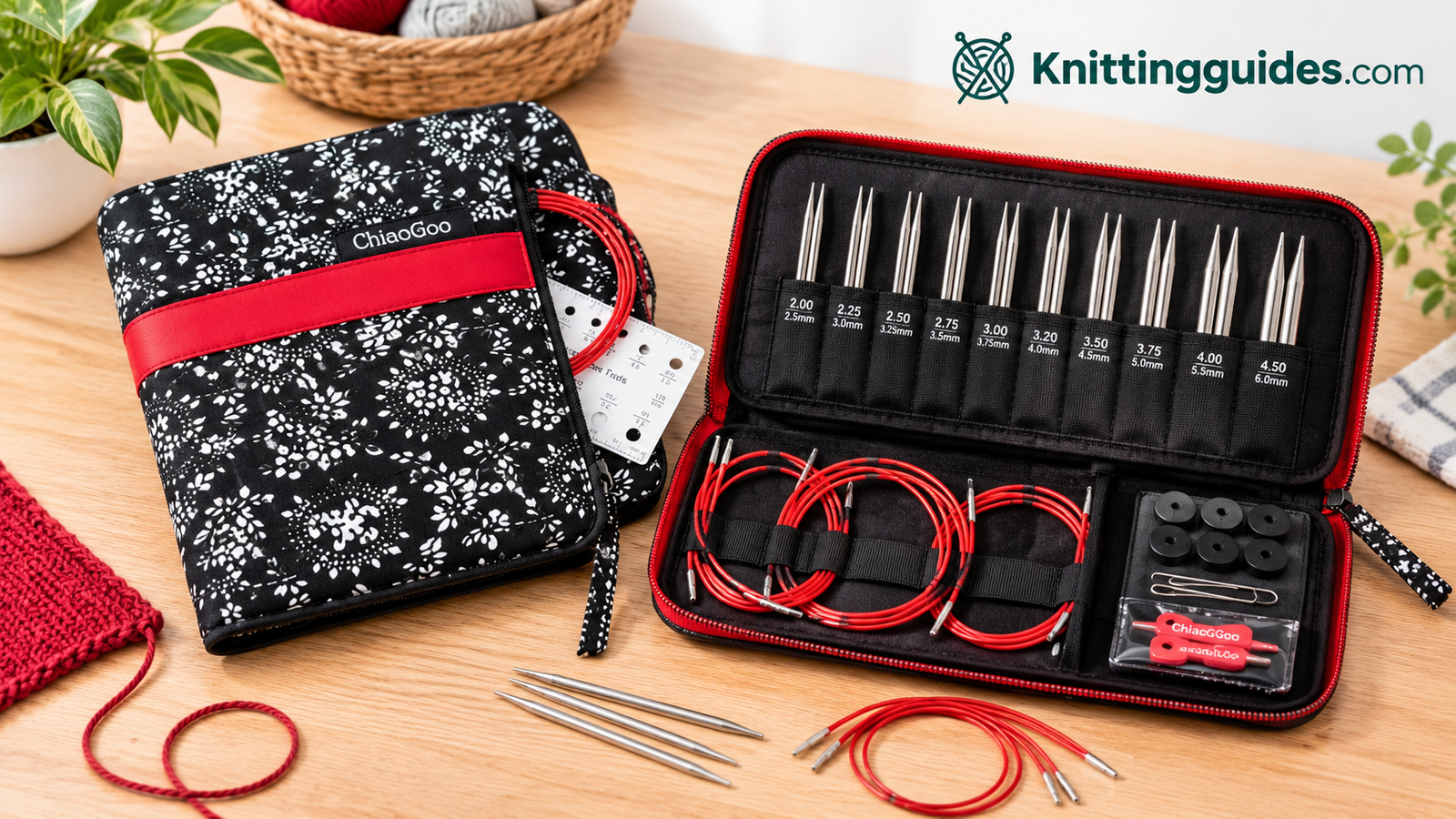
One Case, Dozens of Needle Combinations: Where to Spend Your Money
Ask a knitter what changed their hobby most, and an interchangeable needle set is near the top of the list. Instead of buying a new fixed circular every time a pattern calls for a different length or size, you screw or click a pair of tips onto a cable and get exactly the tool you need in under a minute. It is one of the rare purchases in knitting that saves money, saves space, and improves the knitting itself at the same time.
But interchangeable sets are not all created equal. The gap between a beautifully machined join and a join that snags yarn on every single stitch is enormous — and once you have felt it, you cannot unfeel it. Cables with too much memory coil back on themselves mid-row. Tips that are too blunt slow down lace work. Tips that are too sharp split plied yarn. A case that will not close properly turns your tidy kit into a tangled mess at the bottom of a project bag.
That is why we built this guide around hands-on criteria rather than marketing claims. We compared twelve sets that cover the full spectrum of the market: premium stainless steel systems, warm laminated woods, Japanese bamboo, colourful anodised aluminium, and a whole tier of budget kits that deliver far more than their price suggests. Each one gets a full review block with its strengths, its trade-offs, and the type of knitter it genuinely suits.
If you are completely new to the craft, it is worth starting with our primer on how to start knitting before you invest in hardware. If you already know your gauge and your preferred grip, jump straight to the comparison table below and start narrowing down. Either way, by the end of this article you will know exactly which set deserves a place in your bag — and which ones you can safely skip.
A quick note on how we write these guides: we do not publish invented prices, star ratings, or review counts. Where a specification cannot be confirmed, we describe the characteristic in plain language instead. Everything below is designed to help you make a decision, not to fill a spec sheet.

Quick Comparison: Our Top Picks
Every set in this guide appears in the table below. Scan the material and tip-length columns first — those two factors drive most of the day-to-day knitting experience — then read the verdict line to see who each kit really belongs with.
Swipe to see more →
| # | Image | Product | Key Specs | Verdict | Where to Buy |
|---|---|---|---|---|---|
| 1 | 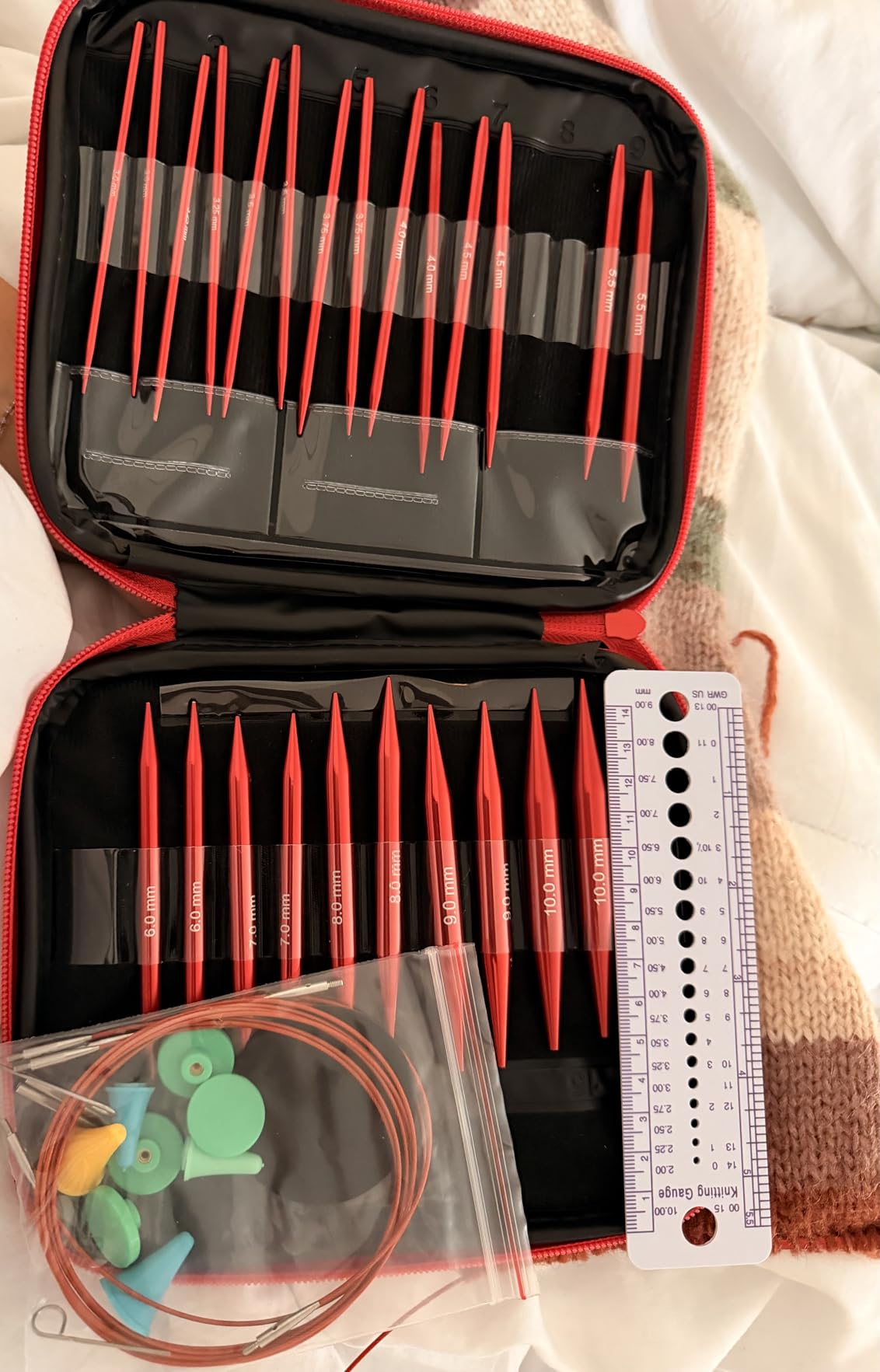 |
ChiaoGoo Twist Red Lace 5″ Complete SetTop PickBest Overall | Stainless steel lace tips · 5″ tip length · Broad size range · Threaded red cable system | Stitch definition and cable control that spoil you for everything else. | Check Price on Amazon |
| 2 |  |
Lykke Driftwood 5″ Interchangeable SetBest Wooden Set | Driftwood-finish birch tips · 5″ tip length · Polished surface · Flexible cord | Quiet, warm, and beautiful — the set you leave out on the table. | Check Price on Amazon |
| 3 |  |
Knit Picks Options Caspian Wood Set (US 4-11)Best Value Wood Set | Laminated wood tips · US 4–11 range · Deep green swirl finish · Metal join hardware | The sweet spot where price, looks, and performance finally meet. | Check Price on Amazon |
| 4 |  |
Clover Takumi Combo Interchangeable SetBest Bamboo Set | Japanese bamboo tips · Combo size coverage · Lightweight · Warm, gentle grip | Forgiving on the hands and famously kind to slippery yarn. | Check Price on Amazon |
| 5 |  |
addi Click Unicorn Lace Long Tips SetBest Premium Lace Tips | Plated metal lace tips · Long tip profile · Push-to-click join · Flexible cord | A fast, snag-free click system built for serious lace and fine gauge. | Check Price on Amazon |
| 6 |  |
Ruidi 13 Pairs Interchangeable Aluminum SetBest Budget Metal Set | Aluminium tips · 13 pairs of tips · Wide size spread · Multiple cords and accessories | Maximum size coverage for minimum outlay — a genuinely smart starter. | Check Price on Amazon |
| 7 |  |
Aeelike Interchangeable SetBest Starter Set | Metal tips · Broad size selection · Cables and connectors included · Portable | Everything a new knitter needs to stop rebuying fixed needles. | Check Price on Amazon |
| 8 |  |
Froggod Interchangeable SetBest Everyday Value | Metal tips · Multiple sizes · Cables included · Easy-to-grip finish | A no-fuss workhorse kit for blankets, scarves, and sweater bodies. | Check Price on Amazon |
| 9 |  |
Guclud 4″ Interchangeable SetBest Short-Tip Set | Short 4″ tips · Compact profile · Multiple sizes · Ideal for small circumferences | Short tips turn sleeves and hats into comfortable, close-in work. | Check Price on Amazon |
| 10 |  |
Svartur Interchangeable SetBest Low-Cost Experiment Kit | Metal tips · Broad size range · Cables included · Simple storage | Try the interchangeable format without committing a big budget. | Check Price on Amazon |
| 11 |  |
Weabetfu Interchangeable Circular SetBest Budget Circular Option | Interchangeable circular format · Metal tips · Multiple cable lengths · Connectors | Great for knitters who mostly work flat on circular cords. | Check Price on Amazon |
| 12 |  |
KnitPro Zing Interchangeable SetBest Colour-Coded Metal Set | Anodised aluminium tips · Colour-coded by size · Broad range · Smooth tapered points | Find the right size at a glance — and enjoy doing it. | Check Price on Amazon |
Why an Interchangeable Set Beats Buying Fixed Circulars One at a Time
Most knitters arrive at interchangeable needles through a specific frustration. They start a pattern, realise it calls for a needle size they do not own in the correct cable length, and place yet another order. A few years later there is a shoebox of circulars, half of them tangled, several of them used once. An interchangeable set collapses that entire shoebox into one organised case.
The economics are straightforward but worth spelling out. A single fixed circular covers exactly one combination of size and length. A modest interchangeable set with a dozen tip pairs and several cables covers dozens of combinations — sometimes more than a hundred once you start mixing tips and cords, or joining two cables together with a connector. If you knit garments, blankets, or anything worked in the round, the set pays for itself quickly.
There is a performance argument too, and it matters more than the money. When your cable length always matches your project, the weight of the fabric rests in your lap rather than stretching across the cable. Stitches distribute evenly instead of bunching at the joins. Your hands move less. Over a long project — a sweater body, a blanket edging, a shawl border — that comfort compounds into real fatigue reduction.
Interchangeable systems also teach you to think in terms of tools rather than single-use items. Need a longer cable for a blanket? Swap the cord. Need sharper tips for lace and blunter tips for slippery yarn? Swap the tips. That modularity is exactly why experienced knitters tend to own one premium set and use it for everything from socks to afghans. If you are still deciding between straight and circular formats altogether, our comparison of circular vs straight knitting needles explains where each one shines.
Who benefits most from going interchangeable
- Garment knitters. Sweaters move between sizes and cable lengths constantly — sleeves, body, neckband — and a set makes each transition painless.
- Knitters working in the round. Hats, socks, sleeves, and seamless sweaters all depend on matching cable length to circumference. See our guide to knitting in the round for beginners if that is new territory.
- Travellers. One compact case replaces a tangle of cords, and everything fits in a carry-on project bag.
- Gift knitters. When you knit for other people, you change sizes constantly. Interchangeables absorb that variation without new purchases.
- Anyone short on storage. A tidy case of tips and cables takes up a fraction of the space of an equivalent fixed-circular collection.
When a fixed needle still makes sense
Interchangeables are not universally superior. Very small circumferences — tiny sock cuffs, mitten thumbs — can be awkward with a join sitting inside the work, and many knitters prefer dedicated short circulars or double-pointed needles there. Some knitters also dislike having a join at all in fine lace, preferring a single continuous cable. And if you knit only one project type at one size, a single fixed circular is genuinely enough.
The realistic answer for most people is a good interchangeable set as the backbone, plus one or two fixed needles for edge cases. That combination covers essentially everything.
How We Evaluated: The Criteria That Actually Matter
Marketing copy for knitting needles tends to lead with colour and packaging. Those are nice, but they are not what determines whether you enjoy knitting a hundred rows. The criteria below are what we weighted, and they are the same questions we recommend you ask before spending anything.
1. Join quality
This is the single most important factor and the hardest to judge from a photo. A well-made join is flush, smooth, and stable — your fingers slide over it without catching, and the yarn does not snag on the transition. Poor joins have a visible step or a slightly rough edge, and once yarn catches on it, the frustration is constant. Threaded systems secure with a tightening tool and resist loosening over long sessions; click or push-fit systems swap faster but rely on precise tolerances.
2. Cable behaviour
Cable “memory” is the tendency of a coiled cord to keep its coiled shape. High-memory cables loop and twist while you knit; low-memory cables lie flat and relax quickly in warm water. Nylon-coated steel cables are usually the most supple, plain nylon cords the springiest. If you knit large flat pieces on circulars, cable flexibility matters as much as tip quality.
3. Tip sharpness and taper
Lace and colourwork reward sharp, gradually tapered points that slip into stitches cleanly. Chunky yarn and beginners often prefer slightly blunter points that do not split plied fibres. Neither is “better” — they are matched to work. Long tips give more leverage and hand room; short tips keep small circumferences manageable.
4. Surface and grip
Polished metal is fast and slick, ideal for sticky wool and for knitters who like speed. Wood and bamboo add warmth and a little friction, which helps with slippery cotton, silk, and superwash yarns. This is the criterion most knitters underestimate until they have tried both.
5. Size coverage and consistency
A set that covers a genuinely useful spread of sizes saves more money than a larger set with gaps in the middle. Consistency matters too: tips of the same size should match each other and the labelled size, so your gauge does not drift between needles.
6. Case, accessories, and expandability
Look for a case that keeps tips paired and cables untangled, plus the small essentials — end stoppers, a tightening key, connectors, and a gauge tool. Expandability is the quiet luxury: being able to buy one extra tip pair later instead of a whole new kit.
Swipe to see more →
| Criterion | What “Good” Looks Like | Warning Signs |
|---|---|---|
| Join | Flush, smooth transition; stays tight through long sessions | Visible step, rough edge, loosening under use |
| Cable | Lies flat, relaxes quickly, resists kinking | Coils that fight the fabric, stiff springs near the join |
| Tips | Consistent taper, points matched to your yarn | Blunt on lace, splitting on plied yarn |
| Surface | Even polish or even grain, no rough patches | Snag points, uneven finish, peeling coating |
| Range | Continuous size spread you will actually use | Gaps where your patterns land, mismatched pairs |
| Case | Tips stay paired, cables wind without creases | Everything tangles, no room for accessories |
Everything in the review blocks that follow is scored against those six headings in plain language. Where a set excels at two of them and compromises on another, we say so — because the honest answer is that most needle sets are a trade, and the right trade depends on what you knit.
Premium Picks: ChiaoGoo Twist Red Lace and Lykke Driftwood
If your budget stretches to a flagship system, these are the two to look at first. They take opposite approaches — precision stainless steel versus warm polished wood — and both execute their approach so well that owners tend to stay loyal for decades.
ChiaoGoo Twist Red Lace 5″ Complete Set
Best Overall — the benchmark against which other interchangeable sets get measured.
The Twist Red Lace system has earned its reputation the hard way: by performing consistently across thousands of projects. The stainless steel tips are finely tapered and genuinely sharp without being aggressive, the threaded join is stable and low-profile, and the signature red cable is the closest thing to memory-free that most knitters have used. It is the set we hand to someone who says they want to buy once.
Key Features
- Stainless steel lace tips with a precise, gradual taper for clean stitch entry
- 5″ tip length — the versatile middle ground that suits most hand sizes
- Signature red cable system with minimal memory and a smooth transition at the join
- Threaded connection secured with a tightening key for confident, stable joins
- Complete size coverage with a case that keeps tips paired and cables organised
- Compatible with the wider ecosystem of cables and accessories in the same family
What We Like
- Exceptional stitch definition on lace, cables, and colourwork
- Cable lies flat and behaves itself on large flat projects
- Join stays tight through long knitting sessions
- Sharp enough for fine work without shredding plied yarn
Keep in Mind
- Premium materials come at a premium price
- Steel tips feel cold and slick — a style preference, not a flaw
- Sharp points demand a little attention from absolute beginners
Lykke Driftwood 5″ Interchangeable Set
Best Wooden Set — the one people photograph before they even cast on.
Lykke built the Driftwood line around feel. The birch tips are polished to a soft sheen that gives just enough grip for slippery yarns, the joins are tidy, and the whole set has a calm, crafted quality that makes knitting feel like a ritual rather than a task. It performs beautifully — but it is the tactile experience that wins people over.
Key Features
- Driftwood-finish birch tips with a smooth, warm surface and gentle grip
- 5″ tip length for comfortable hand positioning on most projects
- Well-finished join hardware that sits flush against the tip
- Supple cord that relaxes quickly and stays out of the way
- Broad size coverage housed in an attractive, practical case
- Naturally quiet knitting — no clicking on late-night projects
What We Like
- Warm hand feel that reduces fatigue on long sessions
- Enough grip for cotton, silk, and superwash yarns
- Beautiful finish that makes the kit a pleasure to own
- Light in the hands compared with metal alternatives
Keep in Mind
- Wood tips are less sharp than steel lace points
- Natural material means small variations between tips
- Not the choice for knitters who prize maximum speed
Choosing between these two is genuinely a question of hand feel. If you want speed, sharpness, and cable control that borders on invisible, take the stainless steel route. If you want warmth, grip, and quiet comfort, take the wood. Both are buy-once purchases, and both reward the investment every single row.
Wood and Bamboo Workhorses: Knit Picks Caspian and Clover Takumi
Mid-range wood and bamboo sets are where most knitters find their long-term favourite. They cost meaningfully less than flagship steel, they flatter slippery yarns, and modern manufacturing has closed the quality gap considerably. Two sets stand out here for different reasons: one for value and looks, one for gentle, forgiving handling.
Swipe to see more →
| Feature | Knit Picks Caspian | Clover Takumi |
|---|---|---|
| Material | Laminated wood with a deep swirl finish | Japanese bamboo |
| Size coverage | US 4–11 range | Combo range across common sizes |
| Surface feel | Smooth with light grip | Warm, slightly grippy, very gentle |
| Best for | Value-focused knitters who want style | Beginners and slippery-yarn projects |
| Point style | Moderately sharp, versatile | Rounded and forgiving |
Knit Picks Options Caspian Wood Set (US 4-11)
Best Value Wood Set — the price-to-performance champion.
The Caspian line has been a gateway into interchangeable knitting for years, and the reason is simple: it delivers the look and feel of a premium wood set at a fraction of the cost. The laminated construction gives the tips strength and a distinctive green swirl pattern, while the metal join hardware keeps connections tidy. The US 4–11 range covers the vast majority of everyday patterns.
Key Features
- Laminated wood tips with a distinctive green Caspian swirl finish
- US 4–11 size range — the everyday core of most pattern collections
- Metal join hardware for a reliable tip-to-cable connection
- Moderately sharp point that suits a wide variety of yarns and techniques
- Lightweight in the hand with natural warmth and quiet knitting
- Part of a wider needle family, so the set grows with your collection
What We Like
- Outstanding value for a full interchangeable set
- Size range that matches most garments and accessories
- Attractive finish that makes organising a pleasure
- Good grip for slippery yarns without feeling sticky
Keep in Mind
- Wood tips wear faster than steel with heavy use
- Points are versatile rather than lace-sharp
- Serious lace knitters may eventually want a steel set too
Clover Takumi Combo Interchangeable Set
Best Bamboo Set — gentle on hands, gentle on yarn.
Clover’s Takumi bamboo line is a staple in Japanese needle-making tradition, and the combo interchangeable set brings that craftsmanship into one package. Bamboo offers the most forgiving surface in knitting: light, warm, quiet, and grippy enough to keep slippery fibres under control. For new knitters, that grip is often the difference between enjoying the craft and fighting it.
Key Features
- Japanese bamboo tips with a smooth, natural finish
- Combo size coverage that handles common project weights
- Extremely light in the hand for reduced fatigue
- Rounded, forgiving points that resist splitting plied yarn
- Warm surface that stays comfortable in any season
- Practical storage that keeps the set organised between projects
What We Like
- The most beginner-friendly surface on this list
- Excellent control with slippery cotton, silk, and superwash
- Quiet and lightweight — ideal for travel and long sessions
- Points that forgive loose tension and uneven stitch entry
Keep in Mind
- Slower stitch speed than polished metal
- Rounded points are less suited to dense lace
- Bamboo can show wear over years of heavy use
Premium Alternatives: addi Click Unicorn Lace and KnitPro Zing
Not every premium set follows the same formula. One of these prioritises speed and a tool-free click connection for fine, fast lace knitting; the other turns size identification into a genuinely delightful colour system. Both are excellent — they simply reward different instincts.
addi Click Unicorn Lace Long Tips Set
Best Premium Lace Tips — speed and precision without a tightening key.
addi’s click connection is the reason many knitters switch systems. Tips snap onto the cord with a push and hold securely without tools, which makes mid-project changes genuinely fast. The lace-length points are sharp and finely tapered, and the long tip profile gives plenty of hand room and leverage — exactly what fine gauge and intricate stitch patterns demand.
Key Features
- Plated metal lace tips with fine, precise points for intricate stitch work
- Long tip profile offering comfortable leverage and hand positioning
- Tool-free push-to-click connection for fast, secure tip changes
- Flexible cord designed to sit smoothly alongside the fabric
- Broad size coverage for lace, fingering, and sport weight projects
- Part of a well-established interchangeable ecosystem with add-on options
What We Like
- Fastest tip-changing system in this guide
- Sharp points that excel on lace and colourwork
- Long tips suit knitters who like more needle in hand
- Reliable join that holds through long sessions
Keep in Mind
- Premium pricing reflects the engineering
- Long tips can feel unwieldy on very small circumferences
- Sharp points are less forgiving for absolute beginners
KnitPro Zing Interchangeable Set
Best Colour-Coded Metal Set — you will never hunt for the right size again.
KnitPro’s Zing line solves an annoyance most knitters accept as inevitable: identifying needle sizes at a glance. Each size carries its own colour, so a jumbled case becomes instantly readable. Beyond the colour system, the anodised aluminium tips are smooth and quick, with tapered points that balance speed and control beautifully.
Key Features
- Anodised aluminium tips with a smooth, fast, low-friction surface
- Colour-coded by size for instant identification in the case
- Broad size range covering everyday project weights
- Tapered points that balance speed with stitch control
- Light metal construction that stays comfortable over long sessions
- Consistent sizing that keeps gauge steady across a project
What We Like
- Colour coding removes size-guessing entirely
- Fast, smooth surface for confident, quick knitting
- Lighter than steel with a warmer touch
- Great middle ground between wood grip and steel speed
Keep in Mind
- Anodised finish can show wear at high-friction points
- Smoother than bamboo — less grip on slippery yarns
- Colour preference is personal, not functional
Budget Metal Sets: Ruidi and Weabetfu
Budget does not have to mean compromise. The metal sets in this tier deliver a genuinely useful spread of sizes and workable cables at a fraction of flagship pricing — which makes them ideal for knitters who want to try the interchangeable format, kit out a second set for travel, or buy a gift without overspending.
Swipe to see more →
| Product | Best For | Material | Standout | Link |
|---|---|---|---|---|
| Ruidi 13 Pairs Set | Maximum size coverage on a budget | Aluminium | Thirteen tip pairs in one kit | Check Price |
| Weabetfu Circular Set | Flat knitting on circular cords | Metal | Multiple cable lengths included | Check Price |
| Svartur Set | Testing the interchangeable format | Metal | Low-cost entry with real range | Check Price |
| Froggod Set | Everyday blanket and scarf work | Metal | Straightforward, no-fuss kit | Check Price |
Ruidi 13 Pairs Interchangeable Aluminum Set
Best Budget Metal Set — enormous coverage, minimal outlay.
Thirteen tip pairs in one kit is a remarkable amount of range for the money, and it is the reason the Ruidi set keeps appearing in knitters’ starter kits. The aluminium tips are smooth and quick, the sizes span the weights most people actually knit, and the included cables and connectors make it easy to build the exact length a pattern requires.
Key Features
- Aluminium tips with a smooth surface for comfortable, quick knitting
- 13 pairs of tips covering a wide spread of common sizes
- Multiple cables and connectors to build custom lengths
- Lightweight construction that travels well
- Organised storage so tips stay matched and accessible
- Approachable price for knitters testing the interchangeable format
What We Like
- Outstanding size coverage for the price
- Great for knitters who work across many yarn weights
- Light and easy to throw in a project bag
- Low-risk way to try interchangeable knitting
Keep in Mind
- Finish quality will not match flagship steel systems
- Points are general-purpose rather than lace-specific
- Heavy users may eventually want a premium upgrade
Weabetfu Interchangeable Circular Set
Best Budget Circular Option — built for knitters who live on circular cords.
Plenty of knitters use circulars purely as a way to hold large amounts of fabric — blankets, shawls, big flat panels — without the weight of straight needles on their wrists. The Weabetfu set is designed around exactly that habit, offering multiple cable lengths so you always have a cord that suits the width of your work.
Key Features
- Interchangeable circular format with swappable tips and cords
- Metal tips with a smooth finish and practical point shape
- Multiple cable lengths to match project width
- Connectors for extending cable length on very large projects
- Straightforward setup that suits newer knitters
- Compact storage for the whole kit
What We Like
- Cable variety that suits wide, flat projects
- Affordable entry into circular knitting
- Simple, unfussy design that just works
- Good second set for travel or messy projects
Keep in Mind
- Cable suppleness will not match premium systems
- Finish is functional rather than luxurious
- Best suited to medium and larger circumferences
Entry-Level Sets: Aeelike and Froggod
The first interchangeable set you own should teach you what you like — sharp points or rounded, slick metal or grippy wood, long tips or short — without costing so much that a wrong guess stings. These two kits are ideal for that learning phase, and both are capable enough to stay in rotation long after you have bought something fancier.
Aeelike Interchangeable Set
Best Starter Set — the kit that ends the “buy a new needle every pattern” cycle.
Aeelike’s set is built for the knitter who has accumulated a handful of fixed needles and is ready to consolidate. The metal tips cover a broad spread of sizes, the cables and connectors handle most project lengths, and the whole package travels easily. It is a practical, complete introduction to interchangeable knitting.
Key Features
- Metal tips with a smooth, consistent finish across sizes
- Broad size selection covering everyday project weights
- Cables and connectors included for flexible length combinations
- Portable packaging that suits knitters on the move
- Simple tip-to-cable connection for quick project changes
- Approachable kit for knitters new to the interchangeable format
What We Like
- Complete package with everything needed to begin
- Size spread that matches most beginner and intermediate patterns
- Easy to learn the interchangeable workflow on
- Excellent value as a first set or a gift
Keep in Mind
- Point shape is a compromise rather than a specialist
- Cables are functional, not ultra-supple
- Lace specialists may want sharper tips later
Froggod Interchangeable Set
Best Everyday Value — an unfussy workhorse for big, comforting projects.
Some needle sets earn their place by being quietly reliable rather than exceptional, and that is exactly the Froggod appeal. The metal tips handle everyday weights well, the finish gives decent control, and the included cables make it easy to swap between a scarf, a blanket, and a sweater body without hunting through a drawer.
Key Features
- Metal tips with a practical, easy-grip finish
- Multiple sizes covering common project weights
- Cables included for quick length changes
- Comfortable handling for long evening knitting sessions
- Straightforward storage that keeps the set tidy
- Budget-friendly entry into modular knitting tools
What We Like
- Great all-rounder for blankets, scarves, and sweater bodies
- Comfortable grip that suits long sessions
- Low cost per project once you own it
- Good second set for messy or outdoor knitting
Keep in Mind
- Not designed for fine lace precision
- Cable memory is higher than premium systems
- Best viewed as a value workhorse, not an heirloom
Travel and Small Projects: Guclud 4″ and Svartur
When the project is small — a sleeve, a hat, a sock, a child’s garment — long tips get in the way. Short-tip sets turn that work into comfortable, close-in knitting, and they pack down beautifully. Meanwhile, a low-cost experiment kit lets you test formats and sizes without commitment. These two sets serve those needs perfectly.
Guclud 4″ Interchangeable Set
Best Short-Tip Set — small circumferences become genuinely comfortable.
Four-inch tips are the secret weapon for sleeves, hats, and other tight circumferences. The shorter profile keeps the needles out of your wrists while you work close to the fabric, and once you have knitted a sleeve on short tips, going back to longer ones feels clumsy. The Guclud set delivers that format at an approachable price.
Key Features
- Short 4″ tips designed for small-circumference knitting
- Multiple sizes covering common accessory and garment weights
- Compact profile that packs into the smallest project bag
- Swappable cables for matching circumference precisely
- Comfortable hand position for close-in work
- Great companion set alongside a full-size interchangeable kit
What We Like
- Transforms sleeve and hat knitting comfort
- Tiny pack size for travel and commuting
- Ideal for small hands and tight working spaces
- Excellent value as a specialist second set
Keep in Mind
- Less leverage than long tips on heavy fabric
- Not a replacement for a full-size everyday set
- Short tips take a session or two to adjust to
Svartur Interchangeable Set
Best Low-Cost Experiment Kit — find out what you like before you spend big.
There is real wisdom in buying an affordable set first. You learn whether you prefer slick or grippy surfaces, sharp or rounded points, long or short tips — and then you spend serious money on exactly the right premium system. The Svartur set fills that role neatly, with a useful size range and a simple, honest build.
Key Features
- Metal tips with a smooth, straightforward finish
- Broad size range for exploring different project weights
- Cables included for building multiple needle lengths
- Simple storage that keeps the set usable and organised
- Low entry cost for testing the interchangeable format
- Practical backup set once you upgrade
What We Like
- Minimal investment to learn your preferences
- Useful range for experimenting with yarn weights
- Stays valuable as a travel or loaner set
- Removes the risk from a first interchangeable purchase
Keep in Mind
- Finish and cable quality reflect the price
- Not a lifetime set for heavy daily knitters
- You may outgrow it once you know your preferences
Cables, Join Systems, and Compatibility: The Part Nobody Talks About
Ask knitters about their interchangeable set and they will talk about the tips. Ask them what actually annoys them, and it is almost always the cable. Cables are the part that coils, kinks, twists, and refuses to lie flat — and the join where cable meets tip is where most of the good and bad experiences originate.
Threaded joins versus click joins
There are two dominant connection styles. Threaded joins screw the tip onto the cable and are typically secured with a small tightening key or by hand, producing a very stable, low-profile connection. Click or push-fit joins snap together without tools and are faster to change, but they depend on precise manufacturing tolerances to stay secure.
Neither is objectively better. Threaded systems reward knitters who value a rock-solid join and do not mind ten extra seconds during a change. Click systems reward knitters who change sizes frequently and value speed. What matters is tolerance quality — a well-made click join feels confident, a poorly made one feels uncertain in the hand.
Cable memory, coating, and flex
Cable memory describes how strongly a cord retains the shape it was stored in. Steel cables coated in nylon are usually the most supple and the least memorable; plain nylon cords are springier and more likely to coil. If you knit large flat panels, a supple cable is transformative. If you knit only small circumferences, cable behaviour matters much less.
A simple trick that helps every set: soak the coiled cable in warm water for a few minutes, then lay it flat or hang it with a light weight. Most cables relax dramatically. It is a small ritual that pays off on the first row.
End stoppers, connectors, and swivels
- End stoppers screw onto a cable so live stitches stay safe when you need to free the tips for another project. Essential for anyone with more than one project on the go.
- Connectors join two cables together for extra length — invaluable for blankets and wide shawls.
- Swivel joins reduce cable twist during knitting, which is a genuine comfort upgrade on long projects.
- Tightening keys give threaded joins a final secure turn without stressing the tip.
Compatibility: the honest truth
Interchangeable systems are generally proprietary within their own families. Tips from one brand usually will not connect reliably to cables from another, even when the thread size looks similar. Before buying accessories, confirm that they belong to the same system as your tips. Mixing systems is the most common cause of mysterious snagging and loosening joins, and it is entirely avoidable.
Within a brand family, though, compatibility is usually excellent — cables, stoppers, connectors, and extra tips can be added over time. That expandability is one of the strongest arguments for choosing a well-established ecosystem rather than a no-name kit that may not exist next season.
Material Matters: Metal, Wood, Bamboo, and What Suits Your Yarn
The surface your stitches slide across changes everything: your speed, your tension, your hand fatigue, and even your gauge. Metal, laminated wood, and bamboo each have distinct personalities, and matching the material to the yarn is one of the easiest ways to make knitting more enjoyable.
Swipe to see more →
| Material | Speed | Grip | Best Paired With | Watch Out For |
|---|---|---|---|---|
| Stainless steel | Fast | Low | Wool, sticky fibres, lace, colourwork | Slippery yarns can slide off |
| Anodised aluminium | Fast to medium | Low to medium | Everyday weights, quick projects | Coating wear at friction points |
| Laminated wood | Medium | Medium | Most yarns, general knitting | Points wear with heavy use |
| Bamboo | Slower | High | Cotton, silk, superwash, beginners | Slower pace for speed knitters |
When metal is the right answer
Metal needles are fast, durable, and precise. If you knit wool or other fibres with natural grip, metal tips let you fly. They also hold sharp points beautifully, which is why most lace sets are steel. The trade is that slippery yarns — superwash, silk blends, mercerised cotton — can slide right off polished metal, and cold hands may find the surface less comfortable in winter.
When wood or bamboo wins
Wood and bamboo add warmth and friction. For slippery fibres, that friction is a feature: stitches stay put, tension stays even, and you spend less time rescuing dropped loops. For beginners, that control is genuinely confidence-building. Bamboo goes furthest in this direction and is the most forgiving surface in knitting; laminated wood sits in the middle, offering grip with a smoother, faster feel.
Match the point to the project
- Lace and fine work: sharp, gradually tapered points that enter stitches cleanly.
- Chunky and roving-style yarns: slightly blunter points that do not split fibres.
- Colourwork: sharp enough to catch floats cleanly, smooth enough to move quickly.
- Cables: a balanced point that handles both knit and purl crossings comfortably.
If you are unsure where to start, think about your yarn first and your preferences second. Choosing the wrong surface is the most common reason knitters abandon a set they expected to love. And if you are still assembling your yarn library, our guide to the best yarn for beginner knitting explains which fibres pair well with which tools.
Care, Maintenance, and Troubleshooting: Keep Your Set Feeling New
A good interchangeable set is a long-term tool, and a little maintenance keeps it performing at its best. None of this is complicated — it mostly comes down to storage habits and knowing what to do when something starts to feel off.
Storing tips and cables properly
Keep tips paired and capped in their case rather than loose in a bag. Wind cables in large, loose loops rather than tight coils; tight coils are what create memory in the first place. If your case has elastic loops for tips, use them — a set that stays organised is a set you actually reach for.
Loosening joins: the fix
If a threaded join loosens mid-project, it is usually one of three things: the tip was not tightened fully, the thread has picked up fibres, or the tip and cable are from mismatched systems. Clean the threads gently, reconnect, and use the tightening key for a final secure turn. For click joins, check for lint or fibre caught in the connection point — a soft cloth solves most issues.
Snagging yarn at the join
Yarn catching at the tip-to-cable transition almost always means there is a tiny step or a fibre build-up. Clean the join first. If the snag persists, the tip may be damaged — a small burr can be felt more easily than seen. Run a fingertip slowly over the transition; anything you can feel, yarn can feel too.
Cable memory and kinks
Warm water and patience. Soak the coiled cable, lay it flat, and let it relax. For stubborn kinks, hang the cable with a light weight attached. This works on nearly every cable in this guide and takes minutes.
Caring for wood and bamboo
Wood and bamboo are living materials. Keep them away from prolonged damp, avoid extreme heat, and wipe them with a soft dry cloth after heavy use. If a bamboo tip ever feels dry, a tiny amount of natural wax or a lanolin-rich hand balm rubbed in and buffed off restores the surface beautifully — but use sparingly, and never leave residue that could transfer to yarn.
When something goes wrong mid-project
Dropped stitches, split yarn, and accidental increases are part of every knitter’s life, and the tools are rarely the culprit. Our guide to how to fix mistakes in knitting covers the rescue techniques worth knowing, and a decent knitting light prevents most of those mistakes before they happen. Finishing well matters too — a neat bind-off is covered in our walkthrough on how to cast off knitting.
Choosing Sizes, Building a Set, and Avoiding Beginner Mistakes
Even the best interchangeable set is only useful if the sizes match what you actually knit. This section covers how to think about size coverage, how to grow a set over time, and the mistakes that make new owners regret their purchase.
Which sizes matter most
For most knitters, the core working range sits in the middle of the scale — the sizes used for DK, worsted, and aran weight projects. Sets like the Caspian covering US 4–11 address this directly. Finer sizes serve lace, socks, and fingering weight work; larger sizes serve chunky yarns and quick blankets. If your patterns cluster in one area, prioritise coverage there.
If sizing terminology is still fuzzy, our guide to what size knitting needles for beginners walks through the logic, and the needle section of your pattern will always confirm what a project expects.
Build a set in stages
- Start with the core. Buy the set that covers your most common project weights.
- Add a cable length. The single most useful accessory is one more cable size.
- Add specialist tips. Sharp lace tips or short tips for small circumferences.
- Add accessories. End stoppers, connectors, and a tightening key for each bag.
This staged approach spreads the cost and ensures every addition earns its place. It also means you learn your preferences before spending on the premium pieces.
Five mistakes to avoid
- Buying for looks alone. Beautiful tools are lovely, but join quality and cable behaviour decide your daily experience.
- Ignoring tip length. Long tips and short tips feel completely different. Match them to your project type.
- Mixing systems. Tips and cables from different families rarely connect reliably.
- Skipping the case. A set without proper storage degrades faster and gets used less.
- Buying before knowing your style. If you are brand new, an affordable starter set teaches you what you like at minimal cost.
Pairing tools with learning
Tools accelerate skill, but they do not replace it. Reading patterns confidently changes what you can make far more than any needle upgrade — see our guide to how to read a knitting pattern when you are ready to move beyond scarves. And if you are choosing your very first tools at all, our roundup of the best knitting needles for beginners covers the fixed options before you commit to a system.
Frequently Asked Questions About Interchangeable Knitting Needle Sets
What makes interchangeable needles better than fixed circulars?
Flexibility and cost. One set of tips and cables covers dozens of size-and-length combinations, so you stop buying a new fixed circular for every pattern. It also means you can always match cable length to project width, which improves comfort and keeps the fabric weighted properly in your lap.
Are interchangeable sets suitable for complete beginners?
Absolutely — many beginners find them easier, because one kit covers everything they need as they progress. The one consideration is that sharp premium points demand slightly more control, so knitters who are brand new may prefer a bamboo or wood set with forgiving points. If you are just starting out, our guide on how to start knitting will get you casting on confidently.
Which is better: metal or wood interchangeable needles?
Neither is universally better — it depends on your yarn and your hands. Metal is fast, sharp, and durable, ideal for wool and lace work. Wood and bamboo add warmth and grip, which helps with slippery fibres and reduces hand fatigue. Most long-term knitters eventually own both and choose per project.
Can I mix tips and cables from different brands?
Generally, no. Interchangeable connections are proprietary within brand families, and mixing systems is the most common cause of snagging and loosening joins. Even when thread sizes look similar, tolerances differ. Stick to accessories designed for your specific system.
How do I stop my cable from twisting and coiling?
Cable memory relaxes with warmth. Soak the coiled cable in warm water for a few minutes, then lay it flat or hang it with a light weight attached. Storing cables in large, loose loops rather than tight coils prevents the problem from returning. Nylon-coated steel cables tend to be the most supple from the start.
What tip length should I choose — long or short?
Long tips give more leverage and hand room, which suits larger projects and knitters who like more needle in hand. Short tips, such as 4-inch profiles, are far more comfortable for sleeves, hats, and other small circumferences. Many knitters use long tips as their everyday set and add short tips specifically for small work.
Do interchangeable needles affect gauge?
They can, because surface and point shape change how you tension yarn. Slick metal tends to produce slightly looser, faster knitting for many people; grippy bamboo often tightens tension a little. Whatever set you use, check your gauge before committing to a garment — and read more about how patterns express it in our guide to how to read a knitting pattern.
How many cable lengths do I really need?
For most knitters, three lengths cover the vast majority of projects: one short for hats and neckbands, one medium for sleeves and cowls, and one long for sweater bodies and blankets. Connectors let you extend further when a blanket outgrows even your longest cord.
Are more expensive sets actually worth it?
For knitters who knit frequently, yes — the difference shows up in join smoothness, cable suppleness, point precision, and durability over years of use. For occasional knitters or those still learning their preferences, an affordable set delivers most of the practical benefit at a fraction of the cost, and there is real value in testing the format before committing.
Can I take interchangeable needles on a plane?
Most knitters travel with needles without difficulty, but policies vary by carrier and security checkpoint, so it is wise to check before you fly and to carry a project already in progress as evidence of use. Our complete guide to bringing knitting needles on a plane covers the practical details.
Is knitting actually good for you?
Many knitters report that the rhythmic, repetitive nature of the craft helps them unwind, focus, and feel a sense of progress. It is a hobby that produces something tangible while giving your hands and mind a shared task. If you are curious about the crossover benefits, we explore the research angle in is knitting good for the brain. And if you are still choosing between crafts entirely, our comparison of crochet vs knitting lays out the differences.
Final Verdict: Buy the Set That Matches How You Knit
After working through all twelve sets, the pattern is clear. Premium systems like the ChiaoGoo Twist Red Lace earn their reputation through join quality and cable behaviour — the two things you feel on every single stitch. Beautiful wooden sets like the Lykke Driftwood win on hand feel and quiet comfort. Mid-range wood and bamboo options such as the Knit Picks Caspian and Clover Takumi deliver almost everything most knitters need at a sensible price. And budget sets with generous size coverage prove that interchangeable knitting does not require a serious investment to start.
If you want one recommendation: choose based on your yarn and your hands, not on the packaging. Slick metal for speed and sharp lace work. Warm wood or bamboo for slippery fibres and comfortable long sessions. Short tips for sleeves and hats. And always, always check the join before you fall in love with the finish.
Whichever set you choose, it will change how you knit. Projects start faster, finish tidier, and the drawer of tangled fixed circulars becomes a memory. That is a rare kind of purchase — one that makes the hobby better every single time you pick it up.